Recent articles

Wine + Food = Heaven

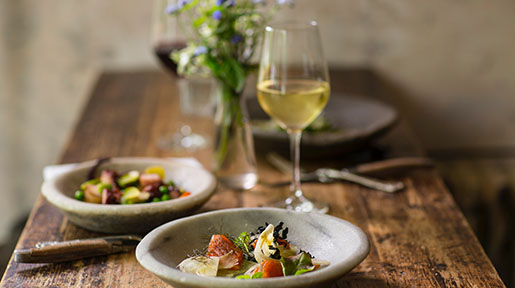
The worthiest goal to which a fine wine can aspire is enhancing a great meal. The body, acidity, and tannins of a big brash Cabernet can overwhelm even a veteran palate all by themselves. But when paired with a rich roast of beef, the harsh edge of the wine is softened by the velvet meat, while the...

Wine X Goes Under

For a decade, Wine X Magazine delivered wine news, reviews and gossip to the hipsters of Generation-X and other youngsters outside of the conventional wine-sipping crowd. As punishment for this flagrant attempt at welcoming a wider demographic of consumers into the exclusive world of wine, industry moguls killed Wine X . They starved the magazine to death, maliciously depriving it of the essential advertising support that almost all publications need to live. Strange, considering that Wine X, which was based in Santa Rosa, enjoyed a circulation of over 300,000, with more that two million readers. It even had a satellite publishing house Down Under. Clearly, the money-making potential was there. But according to Wine X publisher Darryl Roberts, established folks in the wine industry simply did not want to associate with his magazine. They felt that it cut too close to the edge of what is considered appropriate in the wine drinking community, which can be a bit fussy. In a recent conversation, Roberts told me of specific instances when tasting room managers and product advertisers actually called him to cancel their contracts due to the unconventional content of the magazine, which included gossipy articles, an adolescent, chattery tone of voice, and sexy fashion magazine-style photos of celebrities who vouch for wine. The first issue in June of 1997 grabbed barrels of attention with its racy cover shot of a woman’s navel (which I suppose related to wine in some way or another).

Napa versus Sonoma: Marcia versus Jan

Remember Jan from the Brady Bunch? She was the less pretty, less popular younger sister of the sparkling Marcia Brady. While she only melted down once during her four seasons of second class status, (recall the classic “Marcia Marcia Marcia!” episode of season 3), her insecurities were a constant. We Californians have another, perhaps lesser-known rivalry, right in our front yard – that of the wine producing regions of Sonoma and Napa counties. (Yes, the Napa wine-as-buxom-blonde analogy has been done and overdone, but bear with me here). When it comes to wine production, Napa has historically been like Marcia – sexy and popular. Sonoma has been more like Jan – smart and pretty, but a little insecure. Fortunately, this may be changing.

You Can Judge a Wine by the Label

Unless you’re a wine professional, you probably don’t have time to taste hundreds of wines (enjoyable though that would be) in order to choose the right one for next week’s dinner party. Fortunately, any wine label will tell you enough about the bottle’s contents to at least rule it out, and many will hint that this may be the right one. In just ten minutes, you can learn enough about label-reading to at least fake it the next time you go to a nice restaurant. And the best place to start is French wine labels. “Why French?” I hear you ask, and “Does this mean I have to learn the language?” The answer to the second is an emphatic No. You only need to recognize a few key words. As for the first, if there’s one thing the French like as much as wine, it’s bureaucracy. (Guess where the word comes from.) Consequently, French wine production has been increasingly regulated for more than a hundred years, and the labels reflect that. You will always find certain information on every French label (in addition to volume, alcohol content, and producer name). Since the French are generally the world’s biggest producers and consumers of wine, most other countries adopted similar labeling policies (if not the same degree of regulation).

Italian Wine: The Taste of History and Passion

It’s true that the Italians were not the first to invent wine. But more than any other people throughout history, they have demonstrated a serious passion for it. No one has to explain that the Italians are passionate people to start with- about romance, art, culture, family. Wine is also a very important part of life and everyday, which is why the Italians care so much to perfect the production process and quality of taste. The origin of wine actually lies in ancient Mesopotamia, near present-day Iran, sometime between 4000-3000 B.C. The Greeks brought the art of wine making to Southern Italy and Sicily. The Etruscans, from Asia Minor, gave it to central Italy. It might have been love at first taste, but the Romans, in particular, obsessed enough about the Greek process to later refine it and make improvements. They enhanced the Greek presses used for extracting the juices from grapes, increasing the yields, which became especially important as the demand for wine naturally grew as the population expanded.

How a Wine Geek Is Born

Most of us wine geeks have a seminal moment in our wine-drinking careers that we can pin down and say “That’s when I got hooked, that’s when I really caught the wine bug.” I bet most of us didn’t have silver spoons in our mouths, and this moment was probably not borne out of some pretentious snobbery involving a $1000 bottle of Bordeaux that had aromas of gunflint and wet saddle leather. I’m willing to bet that, for most American wine geeks anyway, these wine beginnings were much less formal. For my brother it was during his college years at Ithaca when he visited several local wineries in the Finger Lakes region of Upstate New York. For my friend Sean it was when he and his wife travelled to the Napa Valley on their honeymoon. Wine geeks love to tell their wine stories, and it is these stories, these personal connections and experiences that make wine so special to so many people. I thought an appropriate initial column would be to share with you the experiences that got me hooked on spoiled grape juice.

Central Coast Wines: Exponential Change

“Many of the wineries of California’s Central Coast are still young, but their potential to produce great Pinot Noir, Chardonnay and Syrah are enormous. In a decade, the top viticulture areas of Santa Barbara, Santa Rita Hills and the limestone hillsides west of Paso Robles will be as well known as Napa and Sonoma.” ~Robert Parker, August 2006 Little more than 30 years ago, the Central Coast - defined as Ventura, Santa Barbara, San Luis Obispo and Monterey counties – were nothing more than a loose aggregate of beachside towns, tract housing, mom and pop eateries and lone motels. There were few reasons to visit, unless you preferred an idyllic stroll along the Pacific Ocean or the gentle rolling hills of the rural valleys. No one wanted to live in isolated communities that offered no real amenities, other than nostalgia and nice views.

An Introduction to the Most Quotable Wines on Earth

“You know the old caution: Champagne after sherry makes tummy grow wary.” -Niles Crane I’ve always wondered what Niles and Frasier Crane were talking about. They walked around espousing obscure French literary references, in Italian suits, while holding those tiny wine glasses . And from those glasses they sipped this caramel-colored, somewhat translucent beverage that provoked the haughtiest of behavioral patterns. I knew it had to be something special.

Sonoma County: A Wine Country Overview

What sets Sonoma, California apart from any other wine-producing town in the world? Is it the history surrounding the region? Is it the cozy, romantic getaways that entice both first-time visitors and frequent guests? Is it the world-famous wineries that scatter throughout the picturesque landscape? Or, is it because upon entering the town of Sonoma, you are instantly transformed from the busy and stressed life you live to the laid back and relaxed person you long to be, well before you take a sip of locally produced wine? The answer to this question is simply: all of the above. Located just an hour north of San Francisco, the Sonoma Valley is located in the southern part of Sonoma County, California. The southern end of this vast and hearty valley opens toward the San Pablo Bay and the northern end gives way to 17 miles of bountiful vineyards, quaint towns and plenty of wine tasting for any occasion.

Tower of Power: A Chef's Perspective on Food & Wine Pairing

The stress and tension of a professional kitchen can sometimes make cooking seem like a life or death situation. After all, it’s easy to lose sight of the big picture when the dinner orders begin piling up on a Saturday evening. An extremely busy night is one of those occasions when, even though you do your very best to prepare for it, there is really nothing you can possibly do to avoid the onslaught. At best, you can stay just a half step ahead of the rush and have enough food to get through the dinner service. You finish the night exhausted, but with an innate sense of accomplishment. At worst, you become buried by tickets and bring the entire kitchen to a grinding halt. That’s the most helpless feeling in the world.

Pages