
Recent articles

Mission Possible: Keeping Sonoma True Through the Wine Patrol

Deep beneath the surface of the Sonoma Valley, a controversy lies. Little is known of this controversy unless one happens to delve deep into Sonoma’s rapid growth in recent years. Many people may be surprised to know that Sonomans don’t really want to be compared to, or put against, Napa Valley, its closest rival. Napa, at least some people agree, has become a commercialized Sonoma with high-end shops, high-class eating establishments and high-priced wines; many believe too high-priced. Enter in the Wine Patrol, a group of individuals whose single most important quest in life is to locate, promote and praise Sonoma’s finest wines under $15-$30 and to bring public awareness to Sonoma and its original simple, non-glitzy charm that Napa has commercially overshadowed in the last few years.
Discovering Paso Robles

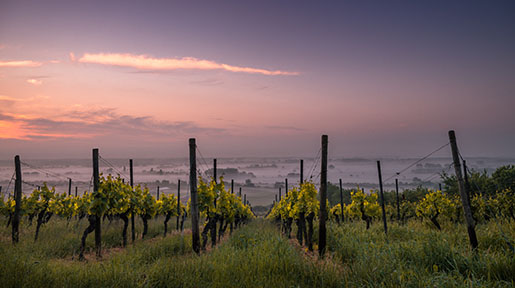
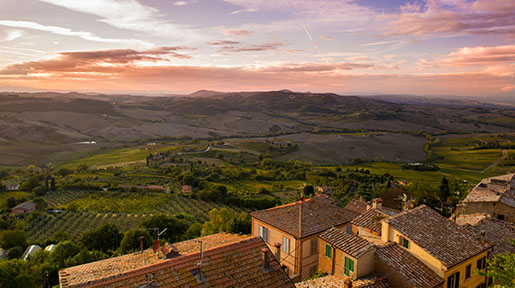
In the summer of 2002, I embarked on a 3300 mile motorcycle tour of the California, Oregon , and Washington coasts, with strategic stops in the various wine regions along the way. The entire trek was amazing, but it was on this trip that I truly “discovered” the wines of Paso Robles. At the time, I knew the area as a producer of big, jammy zinfandels. What I quickly learned, however, was that the region produces an amazingly diverse collection of wines in as many different styles as there are vintners. It turns out that the varied topography of the Paso Robles AVA not only makes for great motorcycle touring, it has a microclimate to suit virtually any varietal you want to grow.

Lessons from the Annual Rhone Rangers Tasting, 2007

The Rhone Report: About Rhone and Rhone-Style Wines and Winemakers is part of an ongoing series. We have just returned from the 2007 Rhone Rangers tasting at Fort Mason in San Francisco (March 18). This was the 10th annual public tasting organized by the Rhone Rangers ( www.rhonerangers.org ), an organization of nearly 200 American wineries dedicated to wines made from 22 grape varieties traditional to France’s Rhone Valley. At the San Francisco tasting, about 134 American (mostly California) producers offered tastes of more than 500 wines made with Rhone grape varieties.

Top Wine/Food Pairing Restaurants in the Napa Valley

CHEFS AND SOMMELIERS REVEAL THEIR FAVORITE PAIRINGS Enthusiasm radiates from their lips, as some of the most innovative chefs and sommeliers in the Napa Valley describe their most smashing wine/food pairings, whether recently concocted, or so reliable that they have become a permanent fixture on their tasting menus. Seasoned restaurant professionals not only uncover their wonderful wine and food combinations, but also explain a bit of the process behind their achievements.

On Matters of Taste

Setting aside the surplus of uppish “authorities” on wine, who use their knowledge to cloak it in an exclusionary and intimidating mystery, wine, in and of itself, is a complex and mysterious substance. It is no small matter that Robert Louis Stevenson was inspired to the comparison : “Wine is bottled poetry.” For, like poetry, wine is concentrated expression. Within its dark reaches we may encounter any number of mercurial impressions, odors transporting us back in time, elements of surprise, and sensory revelations. A wine, like a poem, is never exactly the same wine twice. Not only is each person’s experience contingent upon his or her individual mood, memory, and sense of smell, but a wine, too, as a living, changing substance, is also subject to varying characteristics within a given period of time.

Transplanting into Europe

Wine is a very particular, complex creature. It has many moods and many incarnations. You can taste the same wine at a vineyard in the summer or on a different continent in winter and the flavor, aroma, and body of the wine will change so drastically, it really isn’t the same wine at all. That being said, a great wine will always be great and a poor wine will always be poor, I’m speaking about how we experience wine can vary with our surroundings.

El Vino Nuevo

When I think of Spanish wines, one memory comes to my mind. I remember a few years ago attending a wine tasting at Ramiro’s in San Juan, Puerto Rico. At the time, I was a young sommelier listening to the Spanish winemaker Mariano Garcia prophesize about el vino nuevo , or the new wine. I was attending the tasting with my mentor, Gary Rush, a long time collector, restaurateur and chef. Of course, I was ecstatic to even be invited. (Mariano was the winemaker for Vega Sicilia for 36 years.) His wines were some of the most expensive and sought after wines on any wine list. But Mariano wasn’t talking about the Vega Sicilia wines. In fact, he only talked about one wine, the San Roman, from the Toro region.

You don’t have to pronounce it correctly to drink it

“I’d like to try your Goosetaweiner.” Since barrel-tasting weekend coincided with a few of the major NCAA college basketball conference tournament finals, I had half an eye on the high def TV on the counter. While I was pretty sure I had heard “Goosetaweiner,” I wanted to give the visitor the benefit of the doubt. “I’m sorry? You’d like to try our Gewurtztraminer?” I figured I’d let him off the hook by pronouncing it correctly. That way, he could just repeat it. “Yes, the Goosetaweiner.” There it was again.

Da’ Vine Words

If you are anything like most wine-heads I know, you are always traveling to undiscovered territory, varied by both varietal and producer, on the hunt for the next perfect glass of high. Wine-heads don’t seek to conquer our unquenchable thirst but rather to indulge it.

Pages