Recent articles

Valdepeñas Wines: Value and Quality from Spain's Valley of Stones

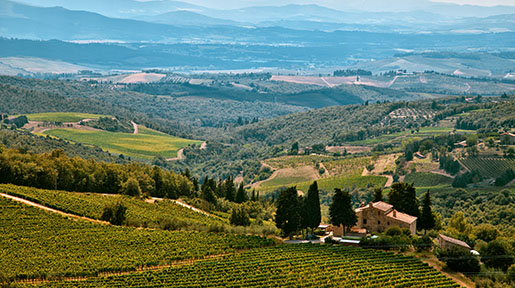
Valdepeñas, which translates to "valley of stones," has been part of Spain's winemaking heritage since at least the 4th century B.C. The area is known not only for its long history of exporting wines but also for its tradition of fermenting wines in huge (1,600 liter) jars called tinajas. In centuries past, winemakers partially buried these large earthenware vessels in the earth, which helped keep the wine cold throughout the fermentation process. Today, of course, the jars have been replaced by modern equipment and production processes; Valdepeñas now sells more wine than any other Spanish DO except Rioja. The Valdepeñas region has long held a reputation for producing quality, value-priced wines.
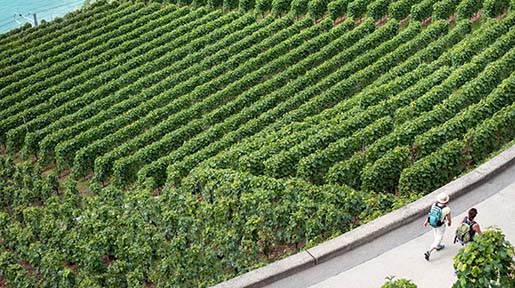
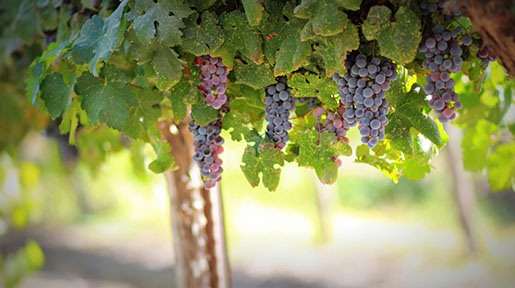
France's Burgundy Wine Region: A Primer on the History, Wines, Vineyards & Terroir

There is a saying among wine aficionados that on the journey to wine understanding, all roads eventually lead to Burgundy. I am not sure I agree with that as my heart seems to be in Italy, but there is no denying the impact that Burgundy has had on the wine world and that some of the most ethereal wine experiences one can have come from Burgundy wines. Many tomes have been written on the subject but the purpose of this article is to give a basic primer on the subject and eventually delve deeper into the Burgundy experience in subsequent articles.

Bairrada: Home of Portugal's Baga Grape

Bairrada has a long tradition of producing wines from just one grape. Until recently, the region's wines were made primarily from the baga grape, often by traditional methods. Producers crushed grapes with feet and left the stems on during the production process. The region's fortunes changed for the better in 1991, when Portugal joined the European Union and modernization of Bairrada's wineries began in earnest. Today you will find both producers that use modern, sometimes even über-modern methods and winemakers dedicated to traditional practices. Happily, when conditions are right, both traditionalists and progressive winemakers can achieve excellent results.

Rhinehessen: The Mineral Soils of Germany's Wine Country

The Rhinehessen region in Germany’s wine country is a study of contrasts. The vast area is planted to just over 28,000 hecters of wine, dominated not by Riesling, but by Muller Thurgau. Ultimately though, this is Germany, and in Germany Riesling is still king. Groebe, Wittman and Straub wineries all share a common bond in this wine region. The minerality of the soil is a constant expression of the wines produced here and the Rhinehessen wines are clean, minimal wines. They also share a family winemaking history that extends hundreds of years.

Muscadet: White Wine from France’s Loire Valley is Perhaps the World's Greatest Wine Value

The Loire River is one of the most important rivers in France. Over the course of its 650 miles, the Loire River Valley is the longest winegrowing region in the world. The river begins in the mountains of the Ardeche in south-central France, before flowing gently north and then west, flowing out to the Atlantic Ocean on the western coast of France. Many of France’s Kings had built chateaux’s along the river earning it the nickname of the Royal valley. In fact, at one point, the Loire Valley was the seat of Royal power in France.

Winemaking: How To Make Wine Better

When I taste a finished wine, I am coming to terms with a number of important quality characteristics that inevitably lead me back to the wine’s elevage – its creation in the cellar. When I taste a young wine in the cellar, I am reading the wine’s health and potential – how it will taste the best many months or years in the future. Off-the-clock, I enjoy certain winemaking styles and varieties more than others. But knowing and making wine are two entirely different things. The flashpoint of any decision in the cellar is not when a wine is treated or blended with another, but when the wine reaches the consumer.

Gigondas Wine: The Rhone Valley's Value Alternative to Chateauneuf du Pape

The Rhone valley produces many great wines such as Hermitage and Chateauneuf du Pape . It also produces great value wines such as Cotes du Rhone . Straddling both categories are some very good wines at reasonable prices including wines from the region of Gigondas (pronounced “zhi-gon-dahs”). Often referred to as the poor man’s Chateauneuf du Pape, these wines are very similar to the style of wines of Chateauneuf albeit slightly lesser in quality. The quality on many Gigondas wines has, however, greatly increased over the last decade.

Hillsborough Winery: A Virginia Wine Profile

Loudoun County in Virginia is roughly 5,300 miles from Istanbul, Turkey and frankly there are few similarities, if any. But Virginia is where the father and son team of Bora and Kerem Baki set up Hillsborough Winery and Vineyards in 2003. Bora, a native of Turkey, emigrated to the U.S. in 1979 and, since he had family in Virginia, he came here. “I had a cousin here, like every immigrant. I’m very happy I chose this area, because I hate earthquakes,” he says referring to several devastating earthquakes in Istanbul he went through.

Best Wine to Pair with Grilled Salmon

IntoWine.com asked our panel of wine experts to suggest a great wine to pair with grilled salmon. While pinot noir seemed to rule the roost as a common favorite, chardonnay proved that wine pairing is beholden to the variances of the human palate as we had strong recommendations both for and against chardonnay.

Pages