Recent articles

La Follette Wines: Greg La Follette Discusses His New, Eponymous Wine Venture

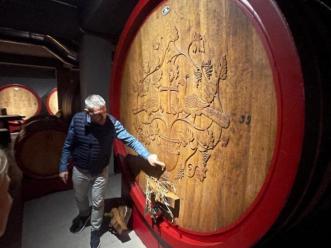
It's not often you get to witness the beginnings of greatness. In the wine world, most consumers don't discover the best small production wines until they are either priced out of reach or available at the end of a very long waiting list. Wine lovers: here is your chance. Greg La Follette, one of California's (and perhaps the world's) finest makers of pinot noir and chardonnay has launched his own label, the eponymous La Follette Wines , and for perhaps the first time in his career is able to focus purely on making great wine for his own label, without distraction. Buy now or forever hold your peace.

Leojami Founder/Winemaker Ben Spencer on Producing the U.S.' First Single-Vineyard 100% Marselan

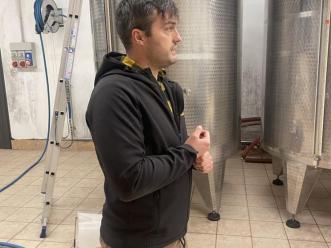
IntoWine recently caught up with winemaker -and frequent IntoWine contributing writer- Ben Spencer to discuss his wine brand, Leojami, and his foray into producing the first single-vineyard, 100% Marselan wine. Thanks to Ben for chatting. What inspired the name Leojami? Leojami (pronounced LAY - OHJ - AH - MEE) is a portmanteau of my wife’s first name LEOnarda and mine benJAMIn. The label is a project of passions – her passion for food and my passion for wine. She is a cookbook editor.

Top Burgundy Red Wines

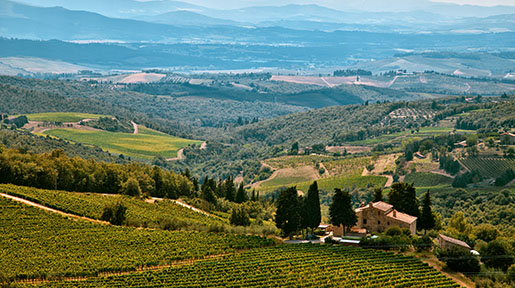
France's Burgundy wine region produces some of the world's truly great wines. This is a region completely dedicated to terroir and tradition. Even the grapes planted in Burgundy are restricted to a few traditional varietals, with pinot noir and chardonnay holding pride of place – as they have for many, many centuries. Burgundy's Winemaking History Burgundy's winemaking history dates back at least to ancient Roman times, possibly earlier, although documentation is scanty prior to the Romans' arrival. Catholic monks cultivated vineyards during the Middle Ages, and the ruling Dukes of Burgundy involved themselves in the grape-growing process in an effort to improve the quality (and, no doubt, export value) of Burgundy wines. It was during this period that pinot noir became the red wine grape of choice in Burgundy. Vineyards shifted from Church ownership to individual owners during the Renaissance, and, in the aftermath of the French Revolution some 300 years later, all remaining Church vineyards were privatized. These privately-owned vineyards were divided and re-divided under Napoleonic law, which forced families to split holdings among heirs instead of willing all inheritable property to one descendant. This division of the vineyards led directly to the system used in Burgundy today; hundreds of growers sell their grapes to négociants , or buyers, who use the grapes to make wine.

Top Food & Wine Apps for iPhone

From apps that let you choose the type of wine, so it can choose the best food pairing, to apps that list just about every possible wine pairing for brunch, ethnic, foods and more, the 4 food & wine apps on the following list can do it all. At prices ranging from free up to $3.99, it might be worth it to add all of them to your arsenal.

Top Wine Apps for iPad

iPad lovers spend lots of time reading, reviewing, surfing, and social networking on their iPad’s. With this in mind, some of today’s top apps for iPad go beyond just offering pairings. These versatile apps offer a complete education on wine. If you’re interested in learning a lesson or two about the wine you’re planning to buy or if you’re brand new to the world of wine, the 5 apps listed below will teach you the 5 W’s of wine and exactly what to buy.

Top Wine Apps for iPhone

You don’t have to be a sommelier or cellar master to select the best wines for something as simple as a romantic dinner for two or as elaborate as a seven-course meal for family and friends. With today’s top wine apps for iPhone, wine amateurs, and just below advanced level wine lovers alike, can help you do everything from better understand the complexities of wine to pairing it with dinners and desserts. Whatever your reason for seeking help on the subject of wine, the following 5 apps will do just fine:

The World's Most Expensive Wines

Tales of legendary, expensive wines fascinate wine lovers from all walks of life. Although most of us will never buy a $1,000 bottle of wine, let alone pay tens of thousands of dollars for a historic, collectible wine, we still find the world's most expensive wines intriguing and captivating.

Cheval Blanc: The “First Growth” of the Right Bank

When the wines of Bordeaux were classified in 1855 all of the wines were from the Left Bank of the Gironde River. In fact, with the exception of Haut Brion, which is from Graves, all of the wines classified were from the Medoc. Since that time, the winemaking areas of Bordeaux have greatly expanded. Some of the best wines in Bordeaux are now made on the Right Bank including some of the most expensive wines in the entire world. While there is no official classification system for all of Bordeaux, there can be no doubt that if such a system was implemented today, at least a few Right Bank wineries would make the list. Perhaps no winery deserves the mythical first growth of the Right Bank title more than Cheval Blanc. In fact, the wines of Saint Émilion, a commune on the Right Bank, were ranked in 1955 and Cheval Blanc was one of two that received the highest rank of Premier Grand Cru Classé (A). Those rankings were redone in 1969, 1986, and 1996 and most recently in 2006 (although that ranking is the subject of an ongoing legal dispute not relevant to Cheval Blanc) and Cheval Blanc has remained a First Growth in every subsequent ranking.

Pages