

Recent articles

Q&A with Nicholas Miller of Bien Nacido Vineyards - Santa Barbara County

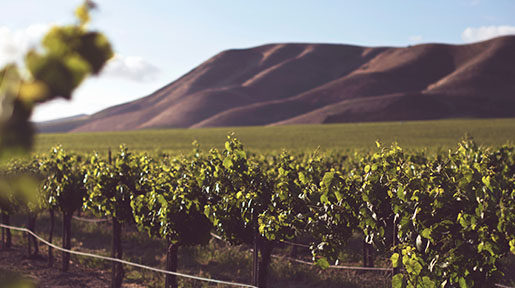
Bien Nacido is not only the most well-known and respected vineyard on California’s Central Coast, but is has the distinction of being one of the major viticultural nurseries in California for certified, varietal budwood. In addition to Bien Nacido, the Millers operate two other vineyard sites, French Camp east of San Luis Obispo, and Solomon Hills in Santa Maria, with well over 2,500 combines acres, as well as two custom crush facilities in Santa Maria and Paso Robles. Bien Nacido was called on of the top 25 vineyards in the world by Wine & Spirits Magazine, and Food & Wine Magazine called them one of the ten best vineyards. The Wine Advocate, Wine Spectator and Wine Enthusiast routinely award over 90 point scores to wines made from Bien Nacido fruit. Bien Nacido is the most widely sourced vineyard on the California Central Coast. Certainly with 800 planted acres it produces a lot of grapes, but beyond that, why is Bien Nacido so sought after? Bien Nacido seems to have that magical formula of making wines with a sense of place. Long term customers, such as Jim Clendenon of Au Bon Climat say they can pick a Bien Nacido Pinot Noir out of a blind tasting. Whether it’s cool climate Syrah, Chardonnay, Pinot Noir or another varietal, our winery customers enjoy receiving product that is uniquely Bien Nacido.

Football and Wine: Dallas Cowboys

What's an appropriate wine to serve at a Dallas Cowboys themed party? What wine would be a good gift for a hard core Cowboys fan? Whether or not you hail from Texas, you probably know the Dallas Cowboys as "America's Team." From coast to coast, you can buy Dallas Cowboys gear at retail stores, thanks to the team's enormous national fan base. Although the Cowboys have their fair share of detractors, no one who follows professional football would dispute the claim that the Cowboys have proven that an expansion franchise can achieve legendary status. The Dallas Cowboys came to life in 1960 as the first modern NFL expansion team, although they were originally called the Dallas Steers. The name was quickly changed to Rangers, then to Cowboys when the new team's owners learned that the name "Rangers" was unexpectedly unavailable. Coach Tom Landry built the Cowboys' program year by year, taking the team to its first NFL championship game in 1966 but losing to the Green Bay Packers. The next year's NFL championship rematch against the Packers quickly became famous as the "Ice Bowl," played in freezing conditions with wind chills plunging below minus 50 degrees Fahrenheit. The Cowboys lost Super Bowl V to the Colts in 1970, but came back the next year to win Super Bowl VI under the leadership of quarterback Roger Staubach.

What to Pair with Champagne? Everything!

I know that we’re still several weeks away from New Years Eve, but it’s my favorite holiday of year, where I truly go all out in the kitchen preparing a 5 – 7 course meal along with some close friends and I’m already planning for it. One of those friends, my co-host for the evening, selects and brings wine paired with each course, and over the years our pairings have varied from the most straight-forward to the most eclectic (a wine pairing with a dish based on halloumi cheese?). However, it being New Years Eve, one particular wine is always called for: Champagne (for purposes of this article, let’s call all sparkling wine Champagne). While I’m not actually an ardent lover of Champagnes, and rarely order it out, I do admit to feeling special when I have a glass in hand. It screams out “It’s Celebration Time”, is clearly associated with special events, and gets people as excited as Kramer during Festivus ( http://en.wikipedia.org/wiki/Festivus ).

Q&A with Tom Wark of Wark Communications, and Noted Wine Blogger

Tom Wark has been in the public relations wine business since 1990 and has become a force to be reckoned with. In addition to his promotion of the industry as a whole, his blog, Fermentations, has become for many, a daily reading ritual where he covers the wine business, wine communications and public relations. He is the founder of the American Wine Blog Awards as well as one of the founders of the Wine Bloggers Conference. In addition, Wark regularly appears at industry conferences as a panelist and moderator covering subjects as diverse as small winery marketing, blogging, social media and the politics of wine. Had you not become involved in the wine industry as PR professional and blogger, where do you think you’d be right now? Well, first I got involved in the wine industry as publicist, the blogging came later. That said, I’d likely be involved in politics. I investigated politics fairly thoroughly coming out of college. I was deterred from the profession, believe it or not, by politicians and consultants I met with who suggested that life as a political activist or consultant is not the best life…by a long shot. Still, I think I would have found myself in that realm despite the advice. I was saved by wine.

Q&A with Peter Mondavi, Jr., Winemaker at Charles Krug Winery

The name Mondavi is synonymous with wine, there is no denying that. Peter Mondavi, Jr., son of Peter Mondavi, Sr. and nephew of Robert Mondavi, heads the Charles Krug- Peter Mondavi Family Napa Valley Winery. Part of the Mondavi vision, and one that he believes only a successful family-owned and operated business can make, is the investment of $25.6 million made to replant the 850 acres of their Napa Valley vineyard land, renewing the winery’s focus on Cabernet Sauvignon and other red Bordeaux varietals and converting to sustainable farming methods. In 2010 the winery received the California Governor’s Historic Preservation Award for the restoration of the winery’s historic structures. What prompted you to pursue winemaking as a career, and was there ever a thought about leaving the family business for something else? My original intent was to pursue some form of engineering, thus the BS in Mechanical Engineering. But my experience working in virtually every aspect of the winery during my summer vacations since I was 8 years old was too strong of a draw. There are way too many draws and positive aspects to living and working in the Napa Valley and in the agricultural business of winemaking.

Q&A with Fintan du Fresne, Winemaker at Chamisal Vineyards

As the son of well-known New Zealand wine journalist Fintan du Fresne grew up with an appreciation for the wine industry. Originally from the southern end of New Zealand’s North Island, he graduated from Victoria University with a degree in geology and set about exploring the relationship between geology and how it affects terroir in wines. He became winemaker at the historic Chamisal property (the first vineyard planted in the Edna Valley, located in San Luis Obispo County) in 2006, where the focus is on Pinot Noir and Chardonnay. Describe your winemaking philosophy. My philosophy is that there is no right way or wrong way to make wine. I’ve worked for enough different wineries in different parts of the world to have seen the same thing done in totally different ways. One winemaker will tell you “you can’t do it that way” while another winemaker is having complete success doing it “that way.” My job is not to make MY favorite wines or wines in the style that I like. My job is to make wines that our consumers love. Too many winemakers are making wine for other winemakers. However, I do believe in the concept of Terroir. A vineyard is going to produce a certain style of wine and that is not something I can change. I can help steer it in a certain direction, but that is all I can do. If Mother Nature is a raging river, a wine is like a kayak on that river. All I can do is steer it through the rapids.

Football and Wine Series

Baseball and Wine combines the great American pastime with wine enthusiasts. Find out the wines served at various ball parks across America and what wines your favorite team chooses to celebrate with.

Football and Wine: Green Bay Packers

What's an appropriate wine to serve at a Green Bay Packers themed party? What wine would be a good gift for a hard core Packers fan? The Green Bay Packers are unique in several different ways. They hail not from a big metropolitan area like New York or Dallas, but from a relatively small city in northeastern Wisconsin; Green Bay has a population of approximately 105,000 people. The team, a nonprofit corporation, is not owned by a prosperous businessman or consortium of investors but by 112,158 shareholders; they are people from all walks of life who share a love of football and are willing to buy shares that pay no dividends and cannot be sold in order to support their team. The Packers do not have official cheerleaders; they discontinued the cheerleading program in 1998 and use cheerleaders from nearby St. Norbert College and University of Wisconsin Green Bay.

Q&A with Larry Londer, owner of Londer Vineyards in Mendocino

Larry and Shirlee Londer of Londer Vineyards crafted their first wine in 2001. Since then, they have received critical scores from the top wine magazines for their Pinot Noirs. They helped Mendocino County’s Anderson Valley become a contender in producing high quality Pinot with the help of their first winemaker, Greg LaFollette. Originally from Denver, Larry practiced ophthalmology and Shirlee ran an optical shop in Albuquerque, New Mexico for 27 years. Their move to Northern California signaled their second careers. Today Londer Vineyards makes wine sourced from within and without Mendocino, but focus their attention on the Anderson Valley. Your focus is on Chardonnay and Pinot Noir in the lesser known region of Mendocino. Is that a hard sell given you compete with well-known Carneros and Russian River? Not really. You need to price the wine consistent with our own area and not try to price it like it was coming from Russian River. The blanket of fog that ordinarily curls up from the coast most summer nights and then burns off during the warm dry sunny days allow the vineyards to produce grapes that slowly develop and ripen. We are one of the coolest of the state’s so-called cool-climate wine regions. This is ideal for growing varietals such as Pinot Noir, Gewurztraminer, and Chardonnay.

What is Beaujolais Nouveau?

The third Thursday in November is the date for a wine phenomenon each and every year. “ Beaujolais Nouveau est arrive ” marks the worldwide marketing campaign for this unlikely wine. What is Beaujolais Nouveau and how did we get here? Under the Appellation d'Origine Contrôlée (AOC) wine regulations of France, wine released in the year the grapes were harvested must be labeled nouveau or vin (de) primeur . Each AOC will determine the specific dates the wine may be released. These wines are fruity wines that have just barely made the change from grape juice to wine. They are made quickly, barely allowing time for the grapes to ferment. Some versions are sweet as they have not completed their fermentations and still have some residual sugar.

Pages