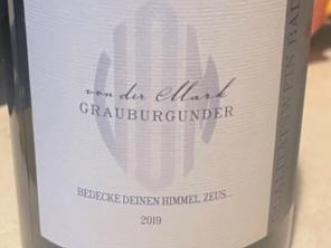
I begin this article with a disclaimer: Baden is one of my favorite wine regions in all of Germany – not that I’ve ever visited a German wine region I didn’t like. I’m heartily biased toward Baden, however, not least because I’ve spent so much time there. Our good friends – the ones who arranged last fall’s winery tour – have taken us all over Baden, ensuring that this warm and inviting part of Germany will always have a special place in my heart.
Dramatic. Historic. Traditional. Cutting-edge. All of these terms describe Germany’s Mosel-Saar-Ruwer wine region, often called “Moselle” in English-language guidebooks. Mosel wines are uniquely German and internationally acclaimed. Perhaps more than any other German wines, Mosel wines truly reflect their terroirs.
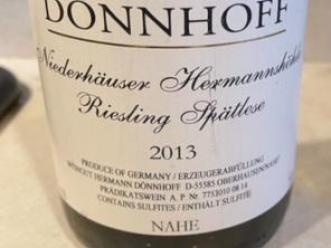
Last fall, I discovered the Nahe wine region for myself. It’s easy to overlook the Nahe when the wine regions along the Rhine are so close by, but I highly recommend this beautiful part of Germany. I’m already planning my next trip to the area.
Johannisberg Riesling. Kloster Eberbach. The Geisenheim Research Institute. These famous names remind us that the Rheingau has always been at the center of Germany’s winemaking tradition.
The Mittelrhein is magical. Whether you visit the Rhine River valley by car, boat or on foot, you’ll fall in love with the steep, vine-covered hillsides peppered with castles. This wine region, which stretches from just south of Bonn to Bingen, is one of my favorites. Here I feel transported to a time of legend, and for good reason. The Mittelrhein’s crags are part of German folklore.
During my recent trip to Germany, I spent a lot of time exploring wine regions in the western part of the country. On one memorable day, I drove most of the Deutsche Weinstrasse (German Wine Route) in the Pfalz wine region with my family.
I step out of the “working van,” as our tasting guide, Nathalie Müller, parks next to rows and rows of grapevines. My husband and friends clamber down and inhale the clean air. High above the town of Leimen, I can see the grapevines stretching across the hills. Ms. Müller grabs a plastic crate of wine bottles and offers us each a wine glass. Deftly, she opens a bottle and pours 2006 Leimener Kreuzweg Auxerrois dry Kabinett into our glasses.
About a year ago, I made my first trip to Franken (Franconia). I fell in love with the gently rolling green hills, the colorful, historic cities and the welcoming people. Throughout our visit, which lasted nearly a week, I felt completely happy, surrounded by history, nature and vibrant culture.
I also fell in love with Franken wine.
If you’ve been keeping up with “German Wines Demystified,” you’ll recall that many German wineries produce wines made from a diverse selection of grapes. The Deutsches Weininstitut (German Wine Institute) claims that nearly 100 grape varieties are grown in Germany.
You did want to know how to say, “Trockenbeerenauslese,” didn’t you?