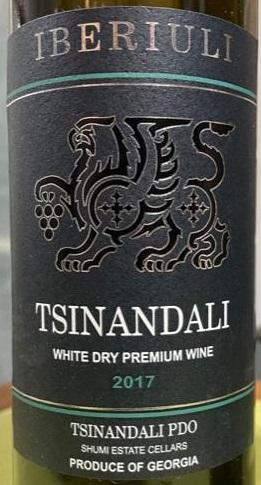
Sadly this was quite corked (TCA) and not worth drinking. It is a blend of 85% Rkatsiteli and 15% Mtsvane.
Grade:
Vintage:
2017
Sadly this was quite corked (TCA) and not worth drinking. It is a blend of 85% Rkatsiteli and 15% Mtsvane.

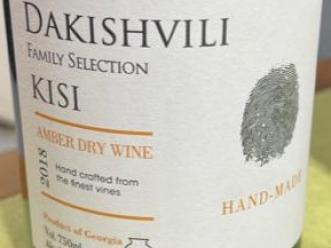
This is a very nice white wine that was fermented and cured in Kvevri (Amphorae). A blend of Kisi, Mtsvane and Rkatsiteli grapes. Deep golden in color, clear and bright. The nose has oranges, honey and Indian spices. Medium bodied. Drying tannins. On the palate, this is clean. Orange peel, slight honey, with a bit of almonds. Nice finish. A very nice complexity here. It took a couple of hours to really open up. It does not drink like a what one thinks of as a usual white wine. It probably should be consumed in the next few years. In terms of food matching, it would go well with
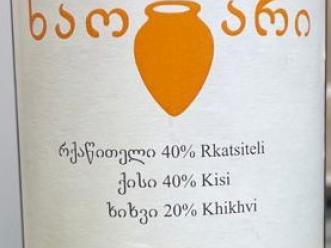
This is from the country of Georgia, and is a blend of 40% of Rkatsiteli (rah-kah-see-tell-y), 40% Kisi (key-see), and 20% Khikhvi (khee-kh-vee) grapes. It is fermented in Kvevri (Amphorae) where it is allowed to macerate for six months. The winery provides itself on being a "natural" wine meaning unfiltered and no use of sulfites. At a recent tasting it proved to be a bit controversial and I liked it decidedly more than most of the group. Golden in color with orange hues. There is a lot of VA (volatile acidity) on the nose that was the chief problem others had. A little can be nice a
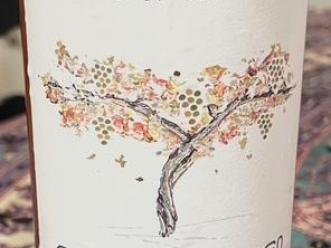
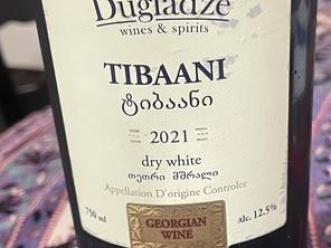
Fascinating and controversial wine. Tasting with a group, I liked this wine much more than most. On opening there seemed to be a significant amount of Brettanomyces on the nose. Yet, it blew off over the next few hours until it was hardly noticeable. That is not a trait of Brett so perhaps it was just bottle stink coming from the Kvevri (Amphorae). It was undrinkable to some, but again, I found it delicious with its highest mark coming at about three hours after opening. Made from the Rkatsiteli Deep amber in color, cloudy and opaque.