Fortified/Late Harvest/Dessert Wine

Dessert Wine: Recommendations to Serve with Fruit Cobblers & Crumbles

It's hard to find someone who dislikes a good crumble at the end of a meal (or for a sinister midnight snack). IntoWine.com asked our panel of wine experts to recommend a dessert wine to serve with fruit cobblers and crumbles:    

To more accurately answer this question, it really does depend on the type of cobbler or crumble.  If the fruit base is red berry, then a red based dessert wine is called for.  My favorite, crumbles and cobblers are, however, apple and peach.  For those, a white grape based dessert wine makes sense.  I would look to those from the Loire valley in France.  For my money, the very best of these is from the Baumard winery and the Quart de Chaumes appellation.  Right now the 2005 and 2006 Baumard Quarts de Chaumes are available in the market.  2005 was a fantastic vintage in the Loire.  2006, while classic, is not far behind.  Both have great acidity that makes for a grand food match. 

Buy the 2005 Baumard Quarts de ChaumesAs a bonus, these wines are available in half bottle formats (375 ml).  A little dessert wine goes a long way.  A half bottle can serve 6 (maybe 8) people for dessert.  These wines are not inexpensive though.  A half bottle can cost $35.  Yet, this is one of the greatest bottles of wine in the world.  The wine has wonderful apple and peach notes with hints of vanilla.  It is slightly sweet but will not overpower a sweet dessert.  The acidity brings everything together wonderfully.  It is certain to be the hit of any dinner party.  - Loren Sonkin, IntoWine Featured Writer 

Muscat Beaumes de Venise: Summer Magic

Muscat Beaumes de Venise is a light and sweet nectar of the Gods, with an aroma of rose petals and tropical fruit and a taste of candied oranges dripping with honey. It makes me glad for summer, because it is the perfect summer dessert wine.

Italy's Molise Wine Region: Where Di Majo Norante Shines

Perhaps the most obscure wine making region in all of Italy is the region of Molise. Molise is surrounded by Abruzzo, Lazio, Campania, and Apulia. Until 1963, the region of Molise was part of the same political region as Abruzzo (Montepulciano d’Abruzzo was discussed in a previous article). In fact, the food and traditions here are closely associated with Abruzzo. Yet, its closeness to both Apulia and Campania lend it a bit of a southern influence.

The wines of Molise achieved their own independence in the 1980’s with the creation of two DOCs: Biferno (named after the largest river in Molise) and Pentro di Isernia. These hillside areas receive wonderful sunshine and are sandwiched between the Apennines Mountains and the Adriatic Sea. Biferno wines can be red, white or rosé. The whites are predominantly made from the Trebbiano grape along with the Bombino in smaller proportions. The reds are a blend of mostly Montepulciano with some of the Aglianico grape. Wines from Pentro di Isernia can also be red, white or rosé. The whites are the same Trebbiano-Bombino grape blend, while the reds (and rosé’s) are usually a blend of Montepulciano and Sangiovese.

More recently, in 1968 a DOC also called Molise was created. This DOC encompasses the region and allows for white, red, rosé and even sparkling wines.

Sweet Sauternes

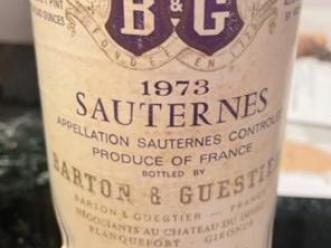
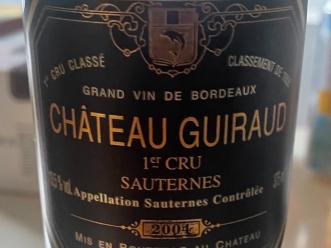
Ordering a dessert wine AS your dessert is always such a sweet, decadent treat. I have to admit I feel a little less guilty ordering a glass of an indulgent elixir instead of a chocolate torte – although I’m sure the caloric difference is negligible. One of my favorite choices is often a honey-sweet Sauternes.

Anatomy of a Well-Rounded Dessert Wine Menu

A perfectly-balanced dessert wine menu does not just happen: much thoughtfulness and love goes into it before its vibrant siren song emerges at your table, beckoning you to sample a naughty sip. I had the good fortune to sit down with Andrew Bresnik, Wine Director of Bricco della Regina Anna and learn how a well-rounded dessert wine menu is born and how you can work your way through it.

Bricco is a delightful neighborhood wine bar and bistro tucked

What is Cognac? A History of this Most Famous French Brandy

The origin of Cognac dates back to the 16th century when Dutch settlers came to this French region to purchase salt, wood, and wine. However, the journey back home made preserving the wine difficult and they needed to find a better way to conserve it. They started by distilling the wine into eau-de-vie, which was a good solution for preservation, but eventually they realized a second distillation made for an even finer, more elegant and pleasant product. This is essentially the birth of brandy. In fact, the word “brandy” comes from the Dutch word “branwinj” which means burned wine.

Prime Port & Cigar Pairings

THREE PRICE POINTS SUITED FOR ANY POCKETBOOK

Elegance. Pearls and lace. Cary Grant and Audrey Hepburn. Port and cigars. The meal is over, relaxed guests retire to cozy corners to chat, and, unless relegated to the patio, just a few head down the hall to the parlor to partake in that traditional pleasure.

Do you wonder how party hosts select cigars and their sidekick ports?

Vin Santo: A Truly Great Dessert Wine from Tuscany, Fit for Saints

Italy is known for many unique and delicious wines. This column has examined many of them. Up until now, however, we have ignored the topic of dessert wines. Many great dessert wines are made in all parts of Italy. Perhaps the most famous and renowned is Vin Santo.

The name Vin Santo literally translates to Saint Wine. There are many theories on the origin of the name. Whatever the true story, this is a wine with a long history. The wine’s history certainly dates back to at least the Middle Ages.

Syndicate content