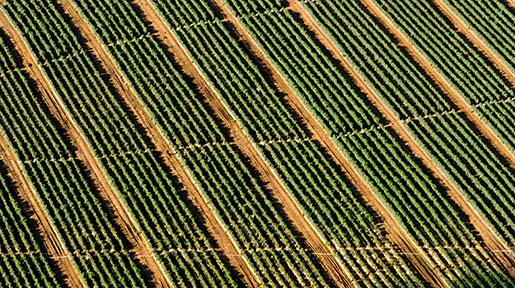
Spanish wine expert Julian Jeffs calls Terra Alta "a place to watch." Winemakers in this remote northeastern region have set their sights high. They hope to make Terra Alta a star player on the international winemaking stage, following in the footsteps of their neighbors from Priorat. With wine lovers around the world focusing on value as well as quality, Terra Alta's winemakers have an opportunity to do just that.
Terra Alta Winemaking History
Terra Alta is part of the political region of Tarragona. This area was settled before the ancient Romans colonized Spain; indeed, there is some evidence that winemaking precedes the Roman occupation. Terra Alta's name means "high land," but the altitude and the mountains surrounding the region did not prevent the Romans, religious communities or, surprisingly, the Knights Templar from trying their hand at winemaking here. Terra Alta was originally known for its white wines, particularly an oxidized type called "amber blanc," but the inevitable arrival of phylloxera forced wine growers to replant.
Local cooperatives led the way, modernizing their cellars and replanting with a wider selection of grape varieties. The Terra Alta DO was established in 197. The regulating council revised its rules in 1995 to reflect a new emphasis on foreign grape varieties, several of which do quite well here. While traditional rancios, white wines and rosés are still produced, Terra Alta's red wines are becoming more important each year.
Terra Alta's most famous summer resident was Pablo Picasso, who vacationed here as a young man. Architect Antoni Gaudí's pupil, César Martinell, designed several of the region's cooperative wine cellars, most notably the cellars of Pinell de Brai and Celler Cooperatiu Gandesa.
Terra Alta Geography, Climate and Soil
You'll find Terra Alta's vineyards on plateaus and valley floors, typically surrounded by rolling hills and impressively jagged mountain peaks. Terra Alta lies inland and southwest of the city of Tarragona, and its climate is therefore best described as a combination of continental and Mediterranean. Winters are cold, with temperatures as low as 23 degrees Fahrenheit, while summers are quite hot, peaking at 95 degrees Fahrenheit. Rainfall varies between about 14 and 20 inches per year, depending on location.
The winds of northeastern Spain, particularly the cierzo that blows from the north and the garbí that comes up from the southwest, help to keep the grapes dry and healthy as they mature.
The soils of Terra Alta tend to be mainly limestone and clay. They are poor in nutrients but have good drainage.
Terra Alta Grape Varieties
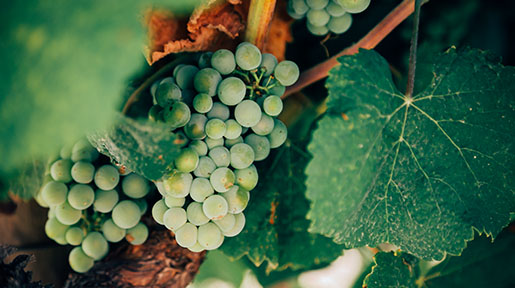
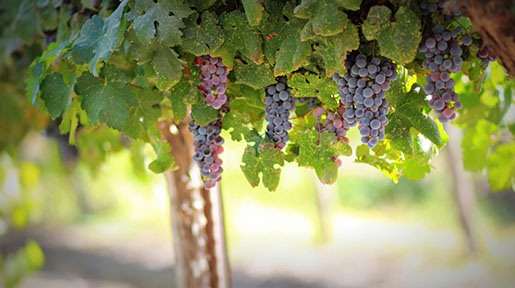
Terra Alta's list of permitted grape varieties was changed in 1995 to allow winemakers to use a wider variety of grapes in their blended wines. Syrah and cabernet sauvignon, in particular, are showing promise. Terra Alta's top white wine varieties are garnacha blanca, macabeo, parellada, moscatel and chardonnay. Garnacha tinta and cariñena (called samsó locally) are the most-planted red wine grape varieties; garnacha peluda, morenillo, syrah and cabernet sauvignon are also popular.
Visiting Terra Alta Wineries
Although Terra Alta is a bit off the beaten path, especially with the lures of Barcelona and Tarragona nearby, the area is worth a visit, especially for fans of modernist architecture. César Martinell, Antoni Gaudí's student, designed several buildings in the area, including, as mentioned, the main structures used by the Celler Cooperatiu Gandesa and Celler Cooperatiu del Pinell de Brai. Martinell himself called the latter the "cathedral of wine."
Your visit to Terra Alta should include a stop at Celler Cooperatiu del Pinell de Brai. Don't miss the tile frieze on the outside of the building. Artist Xavier Nogués created approximately 149 feet of tile depicting local workers making wine and olive oil. When you enter the cellar building, you'll see Martinell's unusual elliptical brick arches, which look a little like Gothic-gone-yoga. The winery staff recommends that you arrange your visit in advance. (Web site in Catalan only.)
You can see more of Martinell's work at Celler Cooperatiu Gandesa, built in 1920. Here, again, you'll find his trademark brick arches. Don't forget to look up to see the gargoyles and the water towers on the roof.
Nearby Edetària, which takes its name from Via Edetana, the ancient Roman trade route between Tortosa and Zaragosa, offers winery tours, but you'll need to arrange your visit in advance.
If you'd like to stay overnight, consider spending a night or two at Casa Piñol, a renovated farmhouse across from the winery building at Vinos Piñol. Casa Piñol's four apartments rent by the night or the week, and your visit includes a winery tour and wine tasting – a perfect opportunity to try some of Terra Alta's top wines.
Terra Alta's Future
While Terra Alta's wine industry has room for more improvement, the region shows a great deal of potential. Terra Alta's winemakers are experimenting with new blends and modernizing their equipment and processes. All of this energetic effort points toward a hopeful future for this strikingly beautiful wine region.