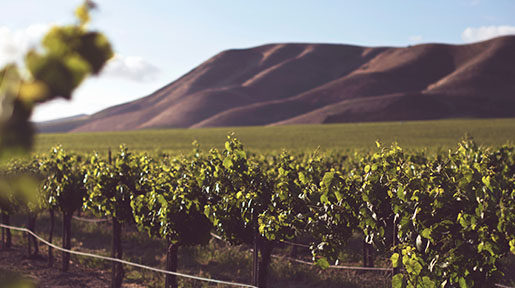
Alentejo is Portugal's largest political region, encompassing about one-third of the country. It's also the least densely populated region in Portugal. About 10 percent of Alentejo is devoted to vineyards. Much of the rest is used for growing cereal grains and olives.
Alicante is located in southeastern Portugal, stretching from the River Tagus, north of the city of Portalegre, south to Serpa and the Algarve. The area's extreme climate has challenged winemakers for centuries; summer temperatures can reach well over 100 degrees Fahrenheit, and lack of rain is a chronic problem. Fortunately, irrigation systems and updated harvesting and winemaking equipment are tipping the scales in favor of winemakers, and the quality of Alentejo wine is improving as modernization and innovation spread.
History
Early records show that the Phoenicians and Romans made wine in Alentejo as early as the 7th century B.C. Although winemaking has always been a part of Alentejo's agricultural tradition, it was never the region's main focus. When phylloxera hit Alejento, many farmers replaced vineyards with olive trees. Vineyards were deliberately replanted with wheat and other cereals during the Estado Novo period, with the intention of making Alentejo Portugal's breadbasket. By the 1950s, little commercial wine production existed in the area. Some towns built cooperatives, allowing growers to produce some wine, but the Alentejo wine industry merely limped through the 1960s and 1970s. A few farms were even taken over by workers during the reign of Portugal's military junta (1974 – 1986), but were later given back to their owners. In 1986, Portugal joined the European Union and installed its first non-military president since the 1920s, and these watershed events changed Alentejo's wine industry. As in many other parts of Europe, Alentejo was able to modernize with EU funding. Although the region's wines still have room for improvement, Alentejo is beginning to make its presence known on the world wine stage.
Geography, Soil and Climate
As mentioned previously, Alentejo's southeastern, interior location and continental climate mean that the region has extremely hot summers with little rainfall. Alentejo's abundant sunshine is an asset, especially now that irrigation is permitted. Europe's largest man-made lake is here in Alentejo, a byproduct of the Alqueva Dam project, and other irrigation projects have been built here. The region's soils are mainly granite and schist, with a few pockets of clay and limestone.
Sub-Regions of Alentejo
Alentejo has been divided into eight sub-regions, each with its own DOC. On wine labels, you'll see the sub-region's name after the regional appellation, e.g. "Alentejo Borba." Wines can also be labeled as Vinho Regional, under the "Alentejano" designation. Growers in each sub-region favor different grape varieties.
Borba
The Borba sub-region includes the towns of Estremoz and Vila Viçosa as well as Borba itself. Borba is Alentejo's second-largest sub-region. The soils are mainly limestone and schist. Popular grape varieties include perrum, rabo de ovelha, roupeiro and tamarez (white) and periquita, aragonez and trincadeira (red).
Évora
The city of Évora is a UNESCO World Heritage Site, thanks to its royal palace, Convent of São Francisco and other historic buildings. Cartuxa, a winery built as part of a charitable foundation that benefits the local area, is one of Évora's largest and best-known producers. Arinta, rabo de ovelha, roupeiro and tamarez (white) grapes are popular here, as are the red varieties periquita, trincadeira, aragonez and tinta caiada.
Granja – Amareleja
Granja-Amareleja is Alicante's northernmost sub-region. The effects of a continental climate are very evident here; rainfall is sparse and yields are low. Soils are poor and consist mainly of granite and schist. Growers in this area concentrate on red wine grape varieties, primarily moreto, periquita and trincadeira.
Moura
Moura is known for its mineral water as well as for wines, and the nearby town of Serpa produces well-known cheeses. This sub-region's soils are mainly calcareous clay. Several red and white wine grape varieties are common here. White varieties include Antão Vaz, fernão pires, rabo de ovelha and roupeiro. Red wine grape varieties include alfrocheiro, moreto, periquita and trincadeira.
Portalegre
This sub-region is different from the rest of Alentejo. It gets more rainfall and has cooler weather because of its higher elevation. In most areas, soils are granite-based. Popular white wine grape varieties include arinto galego, assario, roupeiro, fernão pires and manteúdo. Commonly-planted red wine grape varieties include aragonez, grand noir, periquita and trincadeiro.
Redondo
Redondo is bordered on the north by mountains and on the south by the lake created when the Alqueva Dam was built. Soils are granite and schist, and rainfall is rather sparse. White wine grapes planted here include roupeiro, fernão pires, tamarez, rabo de ovelha and monteúdo. Red wine grapes grown in Redondo include periquita, aragonez, trincadeira and moreta.
Reguengos
Reguengos is considered by many to be the heart of Alentejo's winemaking industry. The sub-region's climate is continental. Soils are granite or schist in most areas. Growers in Reguengos plant white wine grapes typical of Alejento, including roupeiro, rabo de ovelha, manteúdo and perrum. Commonly-planted red wine grapes include periquita, trincadeira, aragonez and moreta.
Vidigueira
Vidigueira's vineyards are protected from harsh northerly winds by the Serra de Portel mountain range. The sub-region's temperatures are quite extreme; summers are very hot and winters are cold. Soils in Vidigueira include both igneous and metamorphic material as well as clay and limestone. Antão Vaz, manteúdo, perrum, rabo de ovelha and roupeiro are commonly-planted white wine grapes. Popular red wine grape varieties include alfrocheiro, moreta, periquita and tinta grossa.
Visiting Alentejo Wineries
The Alentejo wine region has created a wine route with three different itineraries. The Rota dos Vinhos takes you through the region's northern, central and southern sub-regions. You can also visit individual wineries in Alentejo.
Without a doubt, Cartuxa makes Alentejo's most famous wine. This wine, Pêra Manca, is made only in optimum years to preserve its reputation for quality. Red Pêra Manca is made primarily from trincadeira grapes, although it is a blended wine. Wine expert Richard Mayson describes Pêra Manca as "the cult wine of southern Portugal ". The winery also bottles under other labels, including Cartuxa and Foral de Évora. Cartuxa is owned by the Fundação Eugénio de Almeida, a charitable organization which contributes to educational, cultural and social programs in the Évora area. The winery began as a convent, hence the name ("Carthusian"). If you visit the property, you'll be directed to the winery's on-site shop.
Herdade de Malhadinha Nova in Albernoa offers wine tastings, some with lunch included, and can organize group activities on request. The winery has an on-site restaurant (closed Sundays). Book a weekend at the Malhadinha Nova Country House and Spa for a truly luxurious experience.
Herdade dos Coelheiros offers cellar tours, tastings, photo safaris and even hunting at its estate. You can also see how cork and walnut products are produced. If you'd like to spend the night, you can do that as well.
Herdade do Esporão, located in Reguengos de Monsaraz, presents wine-tasting mini-courses in addition to offering traditional tours and tastings. The property includes a newly-built wine bar, restaurant and tasting facility and a 15th-century fortified tower that has recently been restored.
Alentejo's Future
As in other parts of Portugal, some of Alentejo's winemakers have found their paths to success, while others are still experimenting. The region's reputation, already strong within Portugal, is growing outside of the country as well. With its top wines commanding sky-high prices, you can bet that Alentejo winemakers will continue to push toward ever-higher levels of excellence.