Cariñena's winemaking heritage goes back a long way. The Romans who built Carae, today's Cariñena, discovered that the local inhabitants mixed wine and mead – a fermented beverage made from honey and water – as early as the third century before Christ. The Romans continued this winemaking tradition, as they did wherever they settled in western Europe.
During the Middle Ages, the monks picked up Cariñena's winemaking torch and greatly expanded the area under cultivation. Cariñena's wines became known for their quality throughout Spain. In 1585, King Philip II visited the town of Cariñena; the town's central water fountain ran with wine to celebrate the occasion. (This event is commemorated at the annual September wine festival, where you can see the fountain dispense wine instead of water.) By the early 19th century, garnacha wines from Cariñena had a reputation for excellence. Phylloxera arrived in Cariñena in 1901, but by 1932, the wine industry had recovered well enough for the area to be designated as a DO, Aragón's first.
Find Cariñena Wines:
Wines from Cariñena
Bodegas Ignacio Marín
Bodegas Señorio de Aylés
Bodegas Solar de Urbezo's
Today, the sweet wine producers of former days have been replaced by cooperatives and private bodegas that feature modern facilities and production methods. While Cariñena isn't yet a top-tier Spanish DO, individual winemakers here are working to create distinctive, top-quality wines, and they are succeeding.
Geography, Soil and Climate
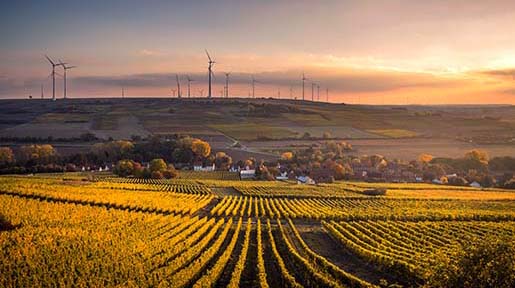
Cariñena lies about 30 miles southwest of Zaragosa, the provincial capital. Most of the DO's vineyards spread outward on the Campo de Cariñena (Cariñena Plain) and the surrounding foothills. Soils vary, but most fall into one of three categories: limestone over rock, slate, or alluvial soils.
Extreme temperatures and low rainfall are the hallmarks of Cariñena's continental climate. Temperatures can reach 100 degrees Fahrenheit in the summer months and may sink to below 20 degrees Fahrenheit during the winter. Low rainfall, hail and the cierzo wind, which blows cold, dry air down from the north, challenge local growers' skills.
Grape Varieties of Cariñena
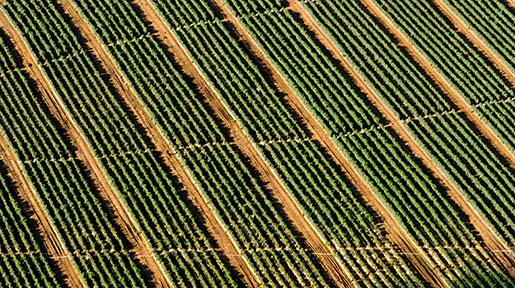
You might think that the Cariñena wine region is primarily planted in the grape that bears its name, but that's not the case. While Cariñena grapes are indeed planted here, garnacha tinta is the most widely-planted grape variety in this DO. Approximately 55 percent of Cariñena vineyards are planted in garnacha tinta grapes. Macabeo (20 percent) is the most popular white wine grape here.
Both native and foreign grape varieties do well in Cariñena. Chardonnay, merlot, syrah and cabernet sauvignon are all planted here, as well as native grapes like macabeo (viura) and tempranillo.
Visiting Cariñena Wineries
Cariñena, like most Spanish wine regions, enthusiastically welcomes visitors to its wineries. Here, it's best to arrange your winery visit in advance. Some wineries are open only for group tours – you add your name to a list, and the tour will happen if enough people make reservations for that particular date and time – while others simply want to know whether visitors will be arriving that day. In any case, you can call the winery or, in most cases, book a tour by online reservation form or email.
You may wish to begin your Cariñena wine experience at the Museo-Exposición Casa de la Viña y el Vino, located at Camino de la Platera, 7, in Cariñena. The Cariñena DO has its own museum here, with displays about the history of winemaking in the region.
Cariñena's largest winery (and Aragón's largest, as well) is a cooperative, Grandes Vinos y Viñedos. You can tour the winery's large, modern complex, visit the cooperative's museum and taste wines on site. Tours here are for groups of 15 or more people, so you'll need to telephone or email the winery to get your name on the tour list. Once 15 people have made reservations for a particular day, you will be able to take your tour.
Bodegas Ignacio Marín is one of the largest privately-owned wineries in the Cariñena DO. Although the winery was founded in 1903, its facilities have been completely modernized. Bodegas Ignacio Marín wines regularly bring home awards and medals. If you'd like to visit this winery, you will definitely need to arrange your visit in advance.
Bodega Señorio de Aylés, another highly-regarded Cariñena winery, welcomes visitors who call ahead. The winery is beautifully situated; it sits right in the middle of the Aylés vineyards. The Aragonese-style winery is a photographer's dream; vines stretch away from the winery in every direction, and the cliffs and gardens delight the eye. The winery itself features bricked-in arches reminiscent of both Spanish and Moorish architecture.
Solar de Urbezo's facilities are supremely modern, almost stark from some angles. The white, block-shaped main building contrasts sharply with Bodega Señorio de Aylés, but both wineries share a complete commitment to quality. The wines of Solar de Urbezo have received numerous awards since the winery's founding in 1995. Solar de Urbezo offers two different tours, one with a wine tasting and one without. You can book your tour online, by email or by telephone.
Goya and Ceramics
The Cariñena region is known not only for its wines, but also as the birthplace of Francisco de Goya, one of Spain's most famous artists. Some visitors to the area combine a tour of Goya's cottage in Fuendetodos with winery visits in Cariñena and a tour of the Pottery Museum in nearby Muel.
Cariñena Quality
From Roman times to the present day, winemaking has played a central role in Cariñena. Throughout its long history, the Cariñena wine region has maintained its reputation for quality. As individual winemakers continue to work with native and foreign grapes to improve their wines, Cariñena's reputation will undoubtedly continue to grow.