Along the French border with Germany lies the region of Alsace (all-SAHss). The region’s customs are a combination of both the French and German culture, a result of the political turmoil this region has long experienced. Alsace has changed ownership four times in the past few hundred years. Since World War I, this area has belonged to France. The wines, however, bear as much resemblance to the wines of Germany as they do to the wines of France. To be more precise, the wines of Alsace are a hybrid of the two, yet distinct from either.
Wine has been made in this area since Roman times. By the Middle Ages, 160 villages were renowned for producing some of the best wines in Europe. Unfortunately, Alsace stands at a crossroad in Europe and has endured many wars on its soil. The Thirty Years War in the early half of the 17th century destroyed the people and economy. Wine making never really recovered before the region was again devastated by the trench warfare of World War I. After the war, the growers in the area attempted to revitalize their vineyards by concentrating on those grapes which would grow best in the area. Sadly, World War II ravaged Alsace bringing winemaking to a virtual halt. Again, after the war, the resilient vignerons attempted to legislate quality by demarking vineyards and enforcing production rules. In 1962, France’s AOC (Appellation d´Origine Controllê) system granted the wines of Alsace AOC status, followed by the recognition of the Alsace Grand Cru AOC in 1975.
Today France’s AOC laws allow nine permitted grape varieties in their table wines. These are Riesling (23% of the total grown), Pinot Blanc (22%), Gewurztraminer (18%), Pinot Gris (15%), Sylvaner (9%), Pinot Noir (9%), Muscat (3%), Chasselas (1%). The astute reader will note that is only eight grapes. The grape Auxerrois is closely related to Pinot Blanc and about 1/3 of the Pinot Blanc grapes are in fact, Auxerrois. Of these grapes, only Pinot Noir produces red wine.
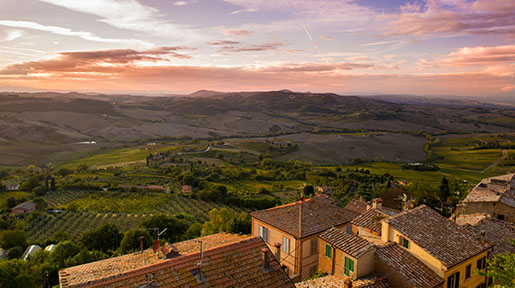
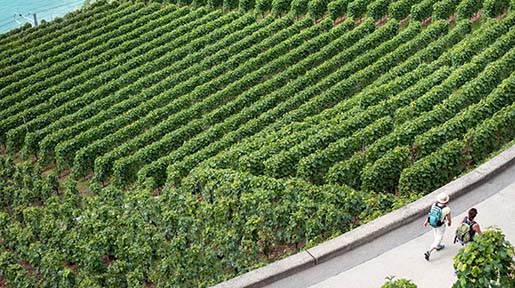
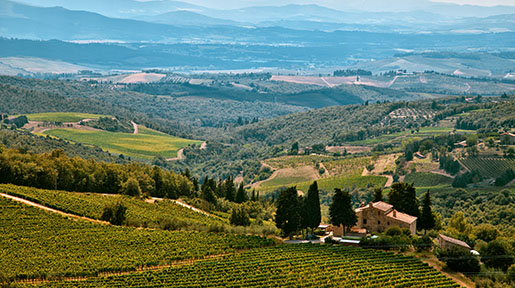
Alsace has a very dry climate. To the west are the Vosges Mountains which protect Alsace from harsh extremes. The vineyards are in the foothills of these mountains at slight elevations where they get a lot of sun. The soil is composed of granite, limestone, schist, sandstone and gneiss depending on location, giving the different vineyards individual characteristics. There are almost 40,000 acres under vine in the region producing more than 160 million bottles annually. Almost 20% of all French white AOC table wines come from Alsace, yet, less than 25% of the production is exported. Clearly, Alsace has problems identifying with the international consumer. Many times, the Pundits have predicted the public at large would soon discover these wines. For a brief moment in the 1970’s it seemed Alsace was going to be the “next big thing”. Yet, for some reason or another, it has never happened.
One reason that the wines of Alsace succeed, especially in the US market, has to do with the labeling of these wines. The American consumer has shown a preference for wines that are sold by varietal name rather than the more European method of naming the wine after the place it was made. Alsace is one of the few regions in France that not only allows varietal labeling (the name of the grape on the bottle label) but has a long history of it having done so since the early 20th century.
Alsace also produces blends, some that are quite good and provide good value. Traditionally blends made up of low grade grapes were called Zwicker, a German word, while blends from premium grapes were called Gentil. In 1871, the Germans tried to replace the term Gentil with the term Edelwein. The Alsatians refused and began using the term Edelzwicker. In 1972, the French eliminated the term Zwicker and now all blends are known as a group as Edelzwicker. Most wines, however, continue to have the grape variety name on the label in addition to the vineyard and place it was grown.
Alsace table wines are labeled as either AOC or AOC Grand Cru. There are fifty Grand Cru vineyards that produce the best wines of the region. The only grapes found in Grand Cru wines are Riesling, Gewurztraminer, Muscat, and Pinot Gris. The reasons that these vineyards produce the best include the soils, the micro-climates and their slopes in relation to the sun; what the French call terroir. It is also because these vineyards are farmed better and the vignerons reduce yields concentrating the remaining grapes with more complexity and flavor.
All wines labeled as Alsace must be bottled in the region of production. They are bottled in a “flûte d’Alsace” which is the tall tapered bottle similar to those of German Riesling.
It can be useful to examine the profiles of some of these grapes. Alsatian Rieslings have great minerality but also offer plenty of grapefruit and lemon fruit flavors. They tend to be dry or at least drier than their sweeter German counter parts. Some of the greatest wines made in Alsace are their Grand Cru Rieslings. These wines are capable of ageing for decades. While they may taste delicious young, with five or better yet ten or more years in good cellar, they are ethereal.
There may be no wine that has a lovelier aroma than an Alsatian Grand Cru Gewurztraminer. With aromas of lychees and citrus and honey, as well as floral notes, the nose on these wines is just gorgeous. For some, the palate does not follow thru. I find that with the better producers, they are willing to take a chance and wait until their grapes get fully ripe before bottling. Other producers, perhaps afraid of the changing weather in this northern climate, harvest too early and the resultant Gewurztraminer wines have a bitter quality to it that is off putting.
The Muscat grape also produces wines with lovely aromatics. These tend to be more floral in quality with lovely citrus traits. There are actually three types of the Muscat grape grown there: Muscat á Petits Grains (both white and rosè) and Muscat Ottonel. Alas, this grape has fallen out of favor and the vineyards are currently being ripped up to be replanted with grapes that are more in fashion today.
The fourth Grand Cru grape is Pinot Gris. Historically this has been called Tokay d’Alsace. This has caused some confusion with the great dessert wine of Hungary called Tokaji and the Tocai Friulano wines of Friuli Italy. The European Union assisted in an Agreement whereby the wines would be called Tokay Pinot Gris and eventually just Pinot Gris. This changeover was supposed to have been completed by 2007 but like all bureaucracies the movement has been slow. There does not appear to be any genetic or historical relationship between the three wines. Alsatian Pinot Gris is a bit more acidic than the Gewurztraminers and fatter than the Rieslings. They can be spicy with crisp pear and apple flavors.
Alsace also produces it share of Pinot Blanc although none are from Grand Cru vineyards. For the most part these are innocuous wines without much distinction. Those that are labeled as Auxerrois are often more interesting with a spiciness to them
About nine percent of the wine produced in Alsace is the red Pinot Noir. I have yet to taste one I thought was good. In this northern region, perhaps they should take their clue from nearby Champagne and use this grape for their sparkling wines. Or perhaps, global warming will allow the Alsatians to be more successful with this varietal. In the meanwhile, I cannot recommend any Alsatian Pinot Noirs.
There are also two dessert styles of wine made in Alsace that are some of the very best wines made anywhere: Vendange Tardive and Sélection de Grains Nobles. The term Vandange Tardive means a late harvest wine when the grapes are allowed to hang on the vines longer than normal. The vines eventually shut down allowing the sugars to accumulate in the grapes while they dehydrate. While these wines may still be vinified dry, that is most often not the case. Most wineries take advantage of this fact of nature to make delicious and thick sweet wines that still show their varietal character. Occasionally, the vines are attacked by the botrytis mold. This is the same mold called “noble rot” that under the right circumstances can make delicious dessert wines. In Alsace, such wines are called Sélection de Grains Nobles or SGN. They can be very expensive but also can be sublime. The best Alsatian wines I have ever tasted are SGN wines. Regrettably, the best of these can cost $200 for a half bottle of wine (375ml).
By far my favorite producer of Alsace wines is Zind Humbrecht, led by Olivier Humbrecht who took over the Domaine his father started in 1959. They own vines in four Grand Cru vineyards: Hengst, Brand, Rangen, and Goldert. In addition, they have six single vineyards that, while not awarded grand Cru status, make sensational wines. This is a biodynamically run winery. Biodynamics is a philosophy that exceeds organic viticulture and relies on phases of the moons and earth to make growing decisions. While some dismiss it as mysticism there is no doubting its success in many of the great vineyards of the world including Zind Humbrecht’s. Some of my favorite wines include the Gewurztraminer Clos Windsbuhl and the Riesling from the Brand vineyard. Both of these now run over $60 a bottle for the regular version and closer to $100 for the Vendange Tardive. While the top wines from Zind Humbrecht can be pricey, they also produce some excellent value wines including their “Zind” line of wines which are available for closer to $20.
The Trimbach winery traces its roots back in Alsace to 1626. They make a wide variety of wines, the best of which is their Riesling from the Clos Sainte Hune vineyard. This is a wine that needs at least a decade or more of cellaring before it is ready to justify its lofty prices with bottles selling upwards of $150 or more. For many, this is the pinnacle of Alsatian table wines. They also produce another Riesling called Cuvee Frèdèric Emile. While more approachable young, this bottle also deserves a decade in the cellar. It is priced closer to $35. If you are looking for value, look for their Riesling. Available for around $20, it will cellar well for years or can be opened the day it is purchased.
Speaking of great values, look for the Hugel wineries’ Gentil bottling available for around $10 or $15. This blend utilizing the old-fashioned term for blends is tasty and consistent from vintage to vintage. It is one of the great values in white wines from France. This wine should be drunk within the first few years of vintage. They also make other bottlings that are very nice but more expensive.
Marcel Deiss is an interesting winery. Run by Jean-Michael Deiss for more than two decades, these wines challenge the varietal labeling so prevalent in Alsace. Rather, Deiss has planted multiple varieties in the same vineyard for the purpose of making blends that express the terroir of a given vineyard. While many wineries make blends for their base levels of wines, Deiss’s are some of his top wines and are excellent if a bit expensive. To really get to know the wines of Alsace, they should not be missed.
Other excellent wineries include Domaine Wienbach, Marc Kreydenweiss, Ostertag, and Albert Boxler. All of these producers make a wide range of wines including table and dessert wines. The producers I have listed will rarely let you down, but there are other good ones too.
One of the difficulties in buying Alsatian wines is that that their levels of sweetness are not consistent from vintage to vintage and among producers. The wine buying public has learned to identify sweet German Rieslings that have proven popular. It used to be an axiom that Alsace wines offered a dry alternative to consumers. Yet some producers, perhaps driven in their search for market share or critical acclaim, are more often leaving a bit of residual sugar in their wines. The problem for the consumer is that there is no way of telling without trying the wine. The information is not on the label. Olivier Humbrecht has recently begun to indicate a sweetness index for his wines to help the consumer. It is his belief that he takes what nature give him and makes the best wine possible. In some years this will be sweet and others dry. While I would prefer more consistency over vintages, at least this method offers the consumer some useful information.
Alsatian wines are great with strong cheeses. Munster is popular in Alsace as is Trami d’Alsace a creamy cheese made from unpasteurized cow’s milk. They are wines that go well with pork and fowl dishes. The Vendange Tardives and SGN wines are wonderful with fruit pastries for desserts.
A review of the best vintages can be found in the Intowine Alsace, France - Wine Vintage Chart. I hope you all go out and explore the white wines of Alsace. These are wines that never seem to get the attention they deserve. I hope you all go out and try a bottle and please, let me know what you think.
Loren Sonkin is an IntoWine.com Featured Contributor and the Founder/Winemaker at Sonkin Cellars.