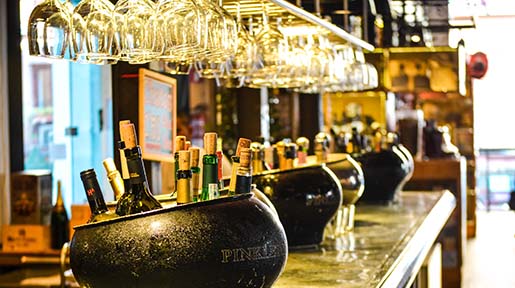
When I taste a finished wine, I am coming to terms with a number of important quality characteristics that inevitably lead me back to the wine’s elevage – its creation in the cellar. When I taste a young wine in the cellar, I am reading the wine’s health and potential – how it will taste the best many months or years in the future.
Off-the-clock, I enjoy certain winemaking styles and varieties more than others. But knowing and making wine are two entirely different things. The flashpoint of any decision in the cellar is not when a wine is treated or blended with another, but when the wine reaches the consumer.
Every day – from the first buds of spring to the glass – a wine is moving, growing, changing. There are ways a winemaker can react to a grape and a wine, but the best winemakers guide a wine toward greatness.
Knowing the anatomy of the grape is important, as is understanding tannin, pectins, pH, temperature, oxygen, and sulfur management. But these should be background elements in the bigger picture.
Having many different options is the key. For example, if I were to purchase one ton of grapes, I might have 180 gallons of must after the grapes are processed. If I had two containers, I might consider putting one hundred gallons in each; using two different cultured yeasts for the ferment; three different storage containers for the ageing process – new and neutral oak, stainless steel.
During and after the fermentation process, frequent tasting of the containers would reveal subtle variations. Eventually, maybe one of the wines appears to have a lot of body, where another is lacking body.
If the two were blended together, you hypothesize, they might make a better wine. This is the basis for the elevation of your wine. A simple bench trial can be helpful in determining which direction to direct the wine.
Bench trials are small scale examples of a larger project. For instance, if you have 180 gallons split between three different 60-gallon barrels, you might try blending representative samples of each batch together. Subtle variations in the amount of one wine that is blended with another can often make a big difference. Ultimately, a better wine is the goal – a more structurally sound, balanced wine than the individual pieces.
The key, then, is to never treat the wine in a way that will scar it, or bring its quality down. Good cellar practices should be omni-present – frequent topping up of barrels, use of inert gas, temperature control, etc.
To that end, I repeat, it is best to have a lot of options, to make many different wines with the same juice, using as many natural and gentle techniques as possible. It is also important to understand the potential of the variety. Certain wines have an affinity toward oak, Cabernet Sauvignon for example. Others, such as Viognier, do not.
Knowing the difference between what you like and how you want your wine to taste are important parts of the puzzle here. Being able to read the wine is also important. Understanding what – if anything – the wine needs (air, water, acid, oak) can be determined during tastings of your young wine.
Tasting other producers’ wines of the variety that you are making should be done methodically. Knowing that you like something is not the same as knowing why you like it. Isolate the ones that taste the best and investigate the vinification techniques used to make the wine. Drafting that knowledge to the cellar can aid decisions which lend to a more complex final product.
Let’s say, after a few months of ‘study’ you ascertain that you want your wine to imitate Australian Chardonnay rather than Chardonnay from Burgundy. Using the Australian model, you might use stainless steel and/or toasted American oak to elevate the wine’s profile. If you would rather your Chardonnay taste like a wine from Burgundy, a program of barrel fermentation and lees stirring could be at the heart of the wine’s elevage.
If your intention is to create a product that is enjoyable in the short term, less elevage is needed. Less options need to be employed.
To make a wine that is continuously at the height of its potential, very special attention should be paid at every stage of grape-growing and winemaking. More options should be engaged.
To that end, a wine should always be vibrant and energized when it goes into the bottle. A healthy pH, and a fair amount of free sulfur dioxide can give the wine the legs it needs to outrun its own organic decomposition. But the architecture of the wine needs to be created long before the cork is injected into the bottle. Simply focusing on the pH and the sulfur level isn’t going to make a dynamite wine.
Wine made well can be complex and intricate, and something we all get very much ‘in the head’ about. But at the end of the day, wine is simply an alcoholic fruit drink, an enjoyable beverage – at least it should be.
The more attention you pay to the details of coaxing the best from your wine, the more your consumer will thank you by buying another bottle of your wine.