Size Isn't Everything
Rheinhessen's long winemaking history and large size are the building blocks of its reputation in the world of wine – and there are pros and cons associated with both. Rheinhessen's most famous wine, Liebfraumilch, while well known as far back as the mid-1700's, might well be called "infamous" today because of its reputation for insipid sweetness. Still, it's hard to argue with brand-name success, so you're likely to find Liebfraumilch prominently displayed in your local wine shop's German section.
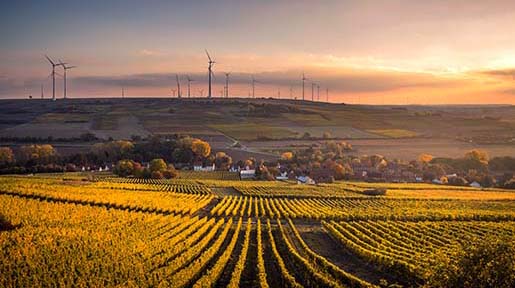
Rheinhessen's size has also been a mixed blessing. There are many different soil types in the Rheinhessen region, and there's plenty of room to grow wine grapes on lesser-quality vineyard sites as well as in prime locations. On the other hand, winemakers have room to experiment and to limit their harvests, and Rheinhessen's top producers have done just that. Others have chosen to specialize in organic wines and are proving that it's possible to use ecologically-sound production methods and win awards.
Rheinhessen Wine History
Rheinhessen, as its name suggests, is bordered by the Rhine River on its north and east sides, and by the Nahe River on its west. The famous cathedral cities of Mainz and Worms, as well as Bingen, known for St.Hildegard's abbey, are part of Rheinhessen's winemaking history. Although the Romans probably brought winemaking to the area, the Church, particularly in Mainz, encouraged winemaking. Because of its strategic location on the Rhine, Mainz became a center for the German wine trade and remains so today. In fact, the Deutsches Weininstitut (German Wine Institute), which regulates German wine standards, is located in Mainz.
Worms, too, played a role in Germany's wine history. Although most people think of Worms as the city where Martin Luther faced down Emperor Frederick at the Imperial Diet, Worms' Liebfrauenkirche, or Church of Our Lady, gave its name to the wine produced from grapes grown in church vineyards. Until 1908, the name "Liebfraumilch" pertained only to wine from the original church property, but local winegrowers agreed that they couldn't keep up with growing demand for the popular wine. Today, Liebfraumilch can be produced throughout the region, and the original vineyards are now called "Liebfrauenstift-Kirchenstück."
Climate, Soil and Geography
Rheinhessen is enclosed by rivers and protected by hills and forests on three sides. To the north, the Taunus Hills shelter the area. The Hunsrück Mountains and the Odenwald (Oden Forest) shield Rheinhessen's vineyards from harsh weather. As a result, Rheinhessen's climate is relatively mild. The region receives about 20 inches of rain per year, and temperatures are moderate. The growing season is fairly long, at least for Germany.
Soils vary widely in Rheinhessen; you can find everything from clay to slate to loess. Some soils here are extremely fertile – not necessarily a good thing if you're in the wine business. Because of this variety of components and conditions, the best winemakers have spent a great deal of time studying their particular soils in an effort to capitalize on strengths and work around weaknesses.
Rheinhessen Grape Varieties
About 25 percent of all the wine produced in Germany comes from Rheinhessen, according to the Deutsches Weininstitut. Rheinhessen exports approximately one-third of its wines.
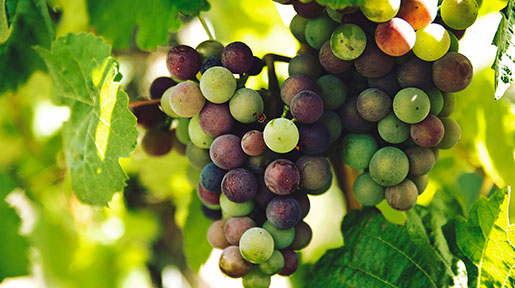
Rheinhessen is best known for white wines, of course. About 68 percent of the region's vineyards are planted in white wine grapes, primarily Müller-Thurgau (16 percent), riesling (13 percent) and silvaner (nine percent). Of the 32 percent of vineyards planted in red wine grapes, dornfelder takes the lead at 13 percent, followed by portugieser at seven percent. As is typical of German wine regions, most Rheinhessen red wines stay at home, while more white wines are exported.
Visiting Rheinhessen Wineries
Opinions on Rheinhessen wines vary widely, but nearly everyone agrees on one fact: Weingut Keller is, without a doubt, Rheinhessen's top winery. The Keller family has owned its estate in Flörsheim-Dahlsheim since 1789. In 2000, Weingut Keller received the coveted "Producer of the Year" award from Gault Millau's The Guide to German Wines. Since then, the Kellers have continued to improve the quality of their red, white and dessert wines. You can buy wines at the winery's "Hofverkauf" (sales office), but you'll need to contact Weingut Keller in advance to make an appointment for a wine tasting. (Web site in German, with some press clippings available in English.)
Weingut Gunderloch, another top Rheinhessen winery, also offers wine tastings by appointment. The Gunderloch vineyards overlook the Rhine River, while the sales office is located in nearby Nackenheim.
If your travels take you to Worms, consider a visit to Weingut Wittmann in nearby Westhofen. This family-owned organic winery produces excellent red, white, dessert and sparkling wines. If you're looking for tradition, this is the place – the family has been making wine here since 1663. Weingut Wittmann welcomes visitors, provided arrangements are made in advance.
Weingut Freiherr Heyl zu Herrnsheim, another of the area's organic wineries, specializes in rieslings, but also offers some silvaner and weißer burgunder wines. The estate dates back to 1561 and is part of German wine history. Here, in 1833, Christian Lauterer produced Germany's first sparkling wine. Today you can visit the winery by appointment only. (Web site is in German and English, but visitor information is in German only.)
Perhaps you'd like to stay overnight at a Rheinhessen winery. Weingut Schmitt in Flörsheim-Dahlsheim offers reasonably-priced guest rooms, some with kitchenettes. If you'd just like to stop by for a meal, Weingut Schmitt's wine tavern is open on most weekend evenings. You can also contact the winery to make an appointment if you'd like to visit during the day.
Wines and More
Although Rheinhessen doesn't have an official wine route, you'll be able to find local wines wherever you go. The area has much to offer, ranging from St. Hildegard's abbey in Bingen to the cathedral and Gutenberg Museum in Mainz to the Nibelungenmuseum in Worms, which chronicles the medieval epic that celebrates the adventures of Siegfried and Kriemhild.
Wherever you decide to go in Rheinhessen, you'll discover that here wine and history go hand in hand. Take some time to experience the variety and vibrancy of Rheinhessen for yourself.