This is the first of a two-part series on making Pinot Noir.
One of the greatest and most difficult wines to grow in the vineyard and make in the cellar is Pinot Noir. For all its troubles, Pinot Noir can also be one of the most rewarding wines to make. I can’t count the number of times I’ve heard a converted beer or spirits drinker say the wine that changed the game for them was Pinot Noir. It is for various reasons that Pinot is the great wine that it is. Now, let’s discuss how we can make a memorable Pinot of our own.
Pinot Noir Grapes
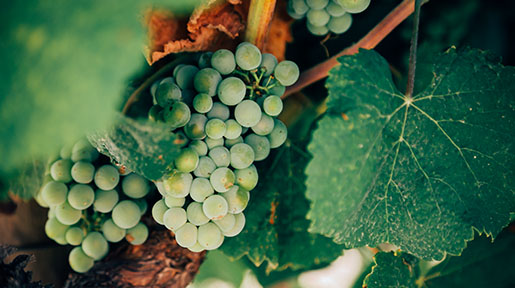
First. Let’s focus on the fruit. I say fruit, because although you can make Pinot Noir from a concentrate, you will never make a great Pinot from a can. You need access to a vineyard. My suggestion is to begin thinking about this relatively early in the season, around March. Make some calls to a local agricultural or viticultural organization. They should be able to give you some contact information for a reputable Pinot Noir vineyard.
Okay, so you have the contact information, but what are you looking for? Different clones of Pinot Noir have distinctive profiles and any varying number of fans and detractors. Even a ‘bad’ clone of Pinot Noir, if it is grown with limited yields (i.e. ~1-3 tons / acre) should suffice. The idea is to find low yielding vines and a quality-conscious grower.
Typically the best clones are those that have been smuggled into the country from Europe. Some great clones of Pinot Noir are: 777; 667; Pommard; 113; 115; and 2A. There are scores of other clones, but these typically rise to the top of most winemakers lists. Depending on how selective you are and how much space you have, the wider your clonal medley is, the better the resulting wine will likely be. Ask the grower if they could put together a field blend of a three-to-four different clones. In doing so, you get a wider possibility of flavors in the resulting wine.
All wishes aside, the grower might not be able to do this, or they may not have the clone you are looking for. You are the only one who can assess the importance of clonal selection to your wine program.
Preparing The Cellar
Let’s assume you’ve contracted one ton of grapes. How do you prepare the cellar? An early article in this series focuses on this subject. It is important to understand the process of fermentation through aging. Although Pinot Noir does adhere to basic red wine making practices, it can be a finicky wine that requires very close attention to detail.
Some basic questions to help you prepare: Do you have a fermenter? Do you have sulfur and yeast and yeast nutrient? Do you have a way to heat or cool the must? Do you have a way to submerge or pump over the cap? Do you have a way to press the grapes once they have finished fermenting? Do you have barrels where you will store the wine through ageing?
When your checklist is complete and the cellar is set up, you are ready to begin watching the grapes develop. You should focus on picking them – the grape grower will handle the logistics – at about 3.4 pH and 25 Brix.
Processing Pinot Noir
When the grapes arrive, it is important to get the weight of the grapes. Knowing the weight is imperative to processing the grapes and making additions. For the purpose of this article, let’s assume you have one half-ton of Clone 115 and another of Clone 777. If you are able to, keep these separate. They will make different wines. Processing Pinot Noir should be done with kid gloves. A gentle de-stemming should separate the grapes from the stems, and the grapes and juice should be transferred to the fermenter(s). For every half-ton of grapes, the must yield is about 100 gallons. Must is grapes and juice in this case. The use of sulfur, though not obligatory, is suggested at a dosage of between 30-50 ppm. It should be mixed into the must as it is processed. Sulfur kills native yeasts and possible bacteria that could arrive from the vineyard.
A native yeast fermentation, (if you are willing to experiment) can be fun, albeit in some cases more work if the native yeasts aren’t strong enough to finish the primary/acoholic fermentation. For the purpose of this article, let’s say you have one strong cultured yeast for one fermenter and the other will be a native ferment. For the native ferment, my suggestion would be to add some carbon dioxide to the tank and seal it. This can be done with gas or the use of dry ice. If using dry ice, it should be added to the fermenter before the must. The carbon dioxide will bubble up through the must, keeping oxygen away. For the cultured yeast fermenter, the must should be sulfured during processing, the tank should not be gassed, and the tank should be sealed.
Analysis and Fermentation
A sample of the juice should be removed one day after processing and analyzed for pH, and sugar. A Titratable Acidity (TA) test can be informative, but it is not mandatory for our purposes at this time. A good target for your initial pH is around 3.4 +/-. A good target for sugars is 25 brix. Manipulations to the pH can be made before, during and after fermentation. But if your sugars are too high, you should consider watering back the must, and adding enough acid to maintain your desired pH. For instance, if you have a 3.4 pH and 29 brix, adding enough water to dilute the sugars to 25 brix would, in theory, also raise your pH. Accounting for this shift, and adding the appropriate amount of acid to the must can be the difference between a balanced, healthy Pinot Noir and one that is not.
The cultivated yeast fermenter should be inoculated one day after it is processed – although some producers also utilize a long ‘cold soak’ to extract flavor and color prior to fermentation. In my opinion, an extended “cold” soak is an unnecessary step. The dosage of yeast is about 2-3#/1000 Gal, or about 50 g/100 Gal must. Yeast nutrients (Superfood, DynaStart, Diamonium Phosphate, etc) should also be added at this point – at a dosage of about 2#/1000 Gal. Having enough nutrients in the must is imperative to a smooth, clean fermentation. Adding nutrients at inoculation, and when the fermenting must is at about 12 brix, can be crucial to your fermentation.
The native fermenter should begin to ferment naturally in a few days. (Have you ever left a container of orange juice in the refrigerator and found it starting to ferment? This is also a native fermentation.) Do not open the closed container until you have proof that the must is fermenting: heat is your indicator. Once your fermenter(s) have become active, a consistent pattern of temperature control and cap management are mandatory. The higher the temperature (~90ºF), and the more pump overs / punch downs you do, the more extraction you will get. This means a resulting wine with bigger flavors and structure, with a potentially lower alcohol. A practice of lower temperatures and fewer cap submersions will result in a higher alcohol wine with more esters.
Read Part Two: Making Pinot Noir: Fermentation, Barreling, Malolactic Conversion, Aging, Racking, & Finishing