When one thinks of wine producing regions, seldom is Lebanon at the top of the list. Yet, few places in the world have a longer tradition of winemaking. Wine has been made in Lebanon for at least 5,000 years since the Phoenicians domesticated grapes. Lebanon was, of course, part of the biblical land of Canaan. Jesus changed water into wine there at the wedding of Cana.
The term wine is derived from a Phoenician word describing the fermentation of grapes. While the Phoenicians may not have invented wine, they perfected viticulture in the ancient world and it was a source of not only pride, but revenue. Interestingly, Robert Ballard, the underwater explorer famous for his discovery of the Titanic wreck, discovered two Phoenician ships that date back to 750BC, with a cargo of wine still intact. It appears the Phoenicians stored their wine in amphorae and then protected it from oxidation with a layer of olive oil and then a seal of pine and resin. The Egyptians were unable to make wines of competing quality and became a leading consumer of their wines. The Greeks learned to make wine from the Phoenicians before spreading the knowledge around Europe.
Once Lebanon became part of the Arabic realm, alcohol production was eliminated except wine produced for Christian religious purposes. Modern Lebanese winemaking dates back to 1857, when Jesuit Monks planted grape vines at Chateau Ksara in the Bekaa Valley. These were Cinsault grapes brought over from Algeria. A decade later Domaine des Tourelles was created by a French Engineer, Eugene Brun. Thru World War I, Lebanon was under the control of the Ottoman Empire after which time it was placed under French mandate. In 1930, Gaston Huchar founded Chateau Musar, Lebanon’s most famous winery. By the end of World War II, Beirut had obtained the reputation of an international city with a strong French influence. This was very helpful to the Lebanese wine industry and likewise, the wines produced tended to be French (Bordeaux or Rhone) in style.
Although the wine industry is now well established, the political situation in Lebanon has made wine production difficult at best. The wars with Israel and the attacks both from Israel and from terrorists have often made wine production a life risking endeavor. Yves Morard from Chateau Kefraya was arrested as a spy by the Israelis who allegedly only let him go once he proved he knew how to make wine. Chateau Ksara lost most of their harvest due to the inability to hire workers during the 2006 Israeli bombing.
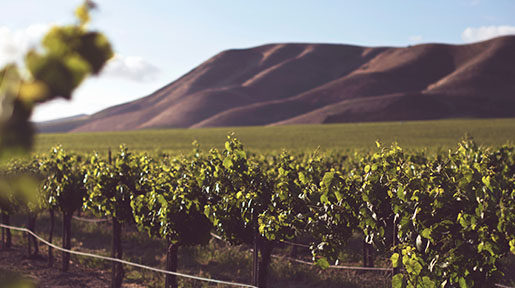
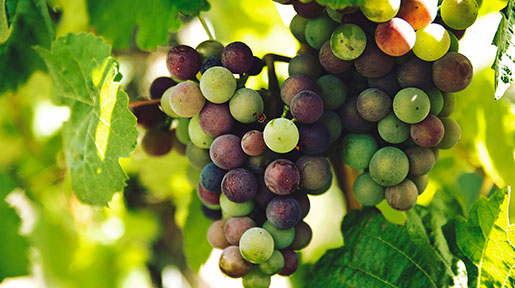
Lebanon has 300 days of sunshine a year which provides a long growing season. All of the wineries have vineyards in the Bekaa Valley. Today’s wine industry in Lebanon is still influenced by the French. The most heavily planted varietals include Cinsault, Carignon, Cabernet Sauvignon, Merlot, and Mourvedre. There are also some indigenous grapes being used, most notably Obaideh and Merwah, both white grapes. Lebanon produces around 600,000 cases of wine per year.
The largest winery in Lebanon is Chateau Ksara. It got its name from the word Ksar, which was a fortress used during the Crusades. It was acquired in 1857 by the Jesuits as a vineyard. Their wine cellar was originally a Roman grotto. In an effort similar to the WPA, the Jesuits expanded the caves during World War I to create employment for the people. The winery was eventually sold to private investors in 1972. The Civil Wars and other conflicts almost put this winery out of business but further outside investments in the 1990’s have this winery making good wine again.
Today, Chateau Ksara produces in excess of 160,000 cases annually. Chateau Ksara makes a wide variety of wines including seven reds, three whites, three Roses and a fortified wine (plus some liqueurs). I recently tasted the 2003 Red Wine, a blend of 60% Cabernet Sauvignon, 30% Merlot and 10% Petite Verdot. At $23, it is a very nice bottle of wine that compares to an early drinking Bordeaux. The nose is Bordeaux-like with tobacco, cassis, leather, and cherries. It is full bodied and complex. On the palate, it has nice cassis with a bit of a tobacco/green pepper streak that I enjoy if not too prominent. A recent 2007 Chateau Ksara Blanc de Blancs white wine that I had was also very good. It is 50% Sauvignon Blanc, 25% Chardonnay, and 25% Sémillon. The wine was silky and easy to drink and under $15.
The next largest winery is Chateau Kefraya. Created in 1951 and sold to Walid Jublat in the 1980’s, they produce four reds, two whites, four roses and a dessert wine. I recently drank a 2006 Chateau Kefraya Les Breteches which cost $13. The nose is nice, albeit simple, with cherries, cassis, black raspberry and some pepper. On the palate, it is medium bodied and slightly tart but rounds out with some air. It has nice fruit, no depth or complexity, but is easy to drink.
Perhaps though, no one winery is as synonymous with a single country as Chateau Musar is with Lebanon. Every discussion seems to start or end with Musar. Chateau Musar was started in 1930 by Gaston Huchar upon his return to Lebanon from an extended stay in France. He used the cellars of an old castle called Mzar in Ghazir overlooking the Mediterranean. In 1959, his son Serge, completed oenology school in Bordeaux and joined the business which he now runs today. They make four red wines, three whites and three roses. The red wines are blends mainly of Cabernet Sauvignon, Cinsault and Carignan. The composition varies from year to year, giving Château Musar a different character and identity each year. The white wines are made from a blend of Obeideh and Merwah, which are native grapes to the Bekaa Valley and Mount Lebanon. According to the legend, Obeideh and Merwah were taken back to Europe with the Crusaders and are the likely ancestors of Chardonnay and Semillon respectively.
The wines of Musar are some of the most idiosyncratic of any wines produced anywhere today. They can be polarizing; some love them and some do not. These wines are made in the rustic style of days gone by. In a wine era where internationalism is a point of debate, these wines are made in a traditional method and not for any particular critics taste. The wines have a wide variation from vintage to vintage as they take what nature had to offer and craft the wine according to what they are given. At a recent tasting of these wines, my first thought upon looking at nine red wines in front of me was that they were indeed RED. They were not purple or some inky opaque near blue color. They looked to be the color I think of when I think of wine. The wines are rustic and many “suffer” from faults such as volatile acidity and brett (a yeast producing a barnyard quality). I put the word suffer in quotes because I did not find it problematic. In fact, I found that it contributed to the uniqueness of these wines. These wines are meant to be aged in a cellar and often are difficult to fully enjoy in their youth.
I don’t usually provide detailed tasting notes on wines on this site, but these wines are so unique and there is a dearth of published tasting notes about them, so here are my tasting notes from this tasting:
We started with a couple whites:
1999 Chateau Musar. Evidence of leakage on the cork. Deep golden in color, clear and bright. The nose has gun powder (sulfur) and an earthy quality to it. With air, honey and quince came out. Full bodied. On the palate, this is a fuller wine and more interesting. Lemony turning more apple pie on the finish. Both these wines seemed in balance.
2000 Chateau Musar. A blend of Bobeideh and Merhwah grapes, indigenous to Lebanon. Straw in color. The nose is faint with limes, honey and seltzer. On the palate, this has an apple cider quality to it. Apples on the finish. A dose of vanilla. The group seemed to prefer this to the 1999, but not me. Nice enough, although more interesting and fun, than a blockbuster. It did improve over the course of the night.
The reds:
1978 Chateau Musar. Ruby in color with some purple and some browning. The nose is cherries and showing some age. On the palate, this is oxidized but has some fruit left. With air, it faded after an hour or so in the glass. Not a bad wine, but you have to like old bones to enjoy it. Fortunately, I do.
1986 Chateau Musar. Ruby/purple/brown in color, clear and bright. The nose again has some VA. The palate has some fruit left, cherries and cassis, but is showing signs of oxidation. Still has some tannins left though. Sweeter on the finish. Not a bad showing, but showing its age and I would drink these up.
1990 Chateau Musar. The cork fell into the bottle on opening and this was decanted. Ruby in color with slight purple notes. The nose again has some VA and also some brett. Cherries and macerated cherries. The palate is complex with currants and cherries and some black licorice. Sweet on the finish. This started off as my favorite but faded a bit as others improved. I would think it is peaking now.
1991 Chateau Musar. Ruby/purple in color, clear and bright. The nose has a dose of VA (which I am not too sensitive about). Cherries and cassis. On the palate, this is complex and tannic. Currants, cherries and some tobacco. Long finish. Excellent wine and drinking young.
1993 Chateau Musar. Ruby in color, clear and bright. The nose is earthy with slight VA notes. Also some currants. On the palate, this is somewhat tart with cherries and cassis. Interesting complexities. This needed some food.
1994 Chateau Musar. Purple/ruby in color, quite young looking. The nose is earthy with cassis and some tobacco. On the palate, there was spritz. It took a long time to blow off, but eventually it did with lots of vigorous swirling. Underneath, it seemed like a good wine and to some extent I think the CO2 seemed to preserve the wine. In the end though, this was the groups last place wine (and mine too when votes were turned in) although it raised my score as the spritz blew off. Interestingly, the bottle was a leaker and the cork showed signs of seepage.
1995 Chateau Musar. Ruby in color with some purple, mostly clear and bright. The nose is earthy with some brett. Also cherries and black currants and a bit of tobacco. Complex. Full bodied. Slightly sweet with a nice candied cherry note on the finish. Lovely wine. Mine and the group’s WOTN.
1996 Chateau Musar. Light ruby in color, clear and bright. The nose is earthy with strawberry tones. Quite soft yet complex. An interesting wine as it has more going on but you need to look hard for it. Cherries on the palate.
2000 Chateau Musar. Ruby in color with slight purple notes, mostly clear and bright. The nose has cherries and some leather. On the palate, this is more cherry cough syrup and candied apples. Long finish. It drinks quite young and needs more time
There are other wineries making nice wines in Lebanon as well. The future looks bright for the wine industry there. Foreign investment is creating new wines with expertise. If the political situation can be stabilized, then perhaps we will be seeing more different wineries contributing. I hope when you see a bottle on the shelf, you will try it. Please let me know what you think.
For your convenience, a limited vintage chart that may be of some help on Lebanese wines can be found here.
Loren Sonkin is an IntoWine.com Featured Contributor and the Founder/Winemaker at Sonkin Cellars.