Q: Why this book now?
PG: There has been no attempt to provide a critical overview of the Washington wine industry for several years. During that period of time the state hit a tipping point, not only with the number of new wineries (roughly one a week over the past five years) but with the overall rise in quality. I began writing my weekly Seattle Times newspaper column in 2002, and at that time I made the personal commitment to turn my full attention to wine writing. I honestly felt that the industry deserved a comprehensive – yet objectively critical – evaluation, and I believed I was uniquely qualified to do it.
Q: Having witnessed first hand the explosive growth of the Washington wine industry over the past 20 years, what would you say were the critical points that enabled or hastened the rise of Washington as a meaningful wine presence?
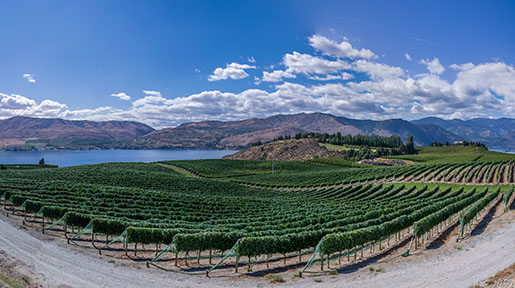
PG: Any wine industry that achieves the type of success that has been generated here in Washington is the result of untold numbers of talented people doing extraordinary work. Many of them will never be known outside of a small circle of friends and associates. In Washington, as I point out in the historical chapter of my book, the pioneering vineyard work, spearheaded by Dr. Walter Clore, dates back to the 1940s. But over the past two decades, the advances in vineyard management, and the exploration of new regions (Red Mountain, Horse Heaven Hills, Walla Walla Valley, Wahluke Slope) paid particular dividends, as the grapes just ripened exceptionally well.
Along with that, America’s tastes were changing. Red wines became more prominent on dinner tables, and Washington makes great red wines. Among younger, more adventurous consumers, there is an appetite for exploring wines and wine regions outside the safe boundaries of Napa and Sonoma. There is also a reaction against blowsy, alcoholic, super jammy wines – the sort of wines that get high scores but can’t actually be drunk with a meal. Washington makes its share of fruit bombs, but many if not most of the best vintners are working hard to keep alcohol in check, to achieve balanced wines without acid additions or watering back, and to find ways to reach optimal ripeness without losing structure.
And it would be hard to overestimate the value of the marketing efforts of Ste. Michelle Wine Estates in advancing the quality as well as the visibility of Washington wines around the world.
Q: What needs to happen for Washington wine to become as important and influential as California wine on the world stage?
PG: I don’t expect that to happen. California has close to 500,000 acres of vineyard; Washington has about 35,000. My point in the book is that Washington wines can stand right alongside California in terms of quality. They do not – and should not – emulate the style, any more than a SuperTuscan Cabernet blend should emulate a first growth Bordeaux. Washington’s best are every bit as good as California’s best, just different. And far less expensive!
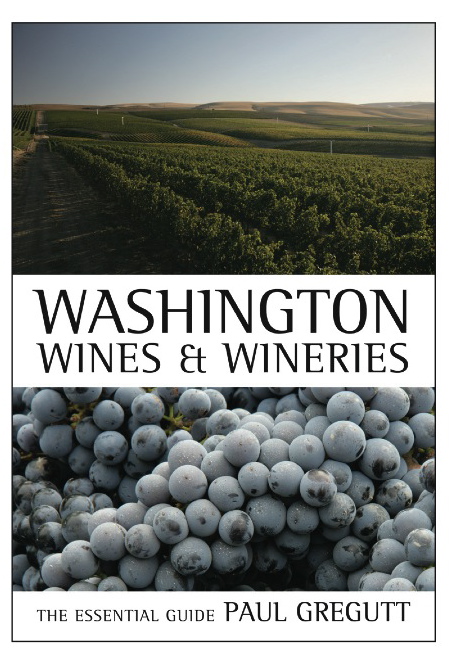
PG: In terms of specific varietal wines, I think Washington Rieslings (all styles, from dry to off-dry to late harvest) are far better than those made in California. The same is true, I believe, for Washington Merlots. These wines are not just different, they are markedly superior at any price point. Washington’s Semillons, Cabernets and Syrahs can stand alongside the best of the Golden state, but I would not go so far as to say they are better, just different.
Q: What major hurdles does Washington face in becoming a wine producing "super power"?
PG: The biggest hurdle is simply availability. There are maybe a dozen brands that are widely available, and another 40 or 50 that reach into the big cities and top restaurants around the country. The other 500 or so are virtually invisible unless you happen to live here. There are no major national wine publications headquartered in the Northwest; that is also a liability.
Q: What Washington regions or producers are particularly underrated?
PG: The most under-rated region by far is the Yakima valley. Some of the best and some of the oldest vines in the state are located there. As for under-rated producers, that’s very hard to gauge. I’m not going to comment on the ratings offered by wine publications for whom I do not write, but they often differ from my own, which are published in the Wine Enthusiast.
Q: What are the biggest misconceptions people have about Washington wine?
PG: The worst misconception is that Washington doesn’t exist! Some people still think it’s Washington D.C. Many others lump it in with Oregon, and don’t grasp that the two are entirely different, except where the AVAs overlap. Another misconception is that Washington wines are over-priced. If you look at how Washington ranks on the annual Top 100 ‘Value’ lists put out by the major wine publications, it generally places far more wines on them relative to its total production than any region in the world. At the other end of the spectrum, look at the priciest wines you can buy – Leonetti Cellar and Quilceda Creek. Quilceda has gotten the 100 point scores, so clearly it belongs up there with any Cabernet producer in the world. Their Cabernet sells for $115 a bottle. Compare that with Harlan, or Sloan, or Screaming Eagle, or Mouton etc. etc.
Q: Who is doing the most interesting and ambitious winemaking in Washington today?
PG: I’ve got to punt on that one. Read the book! It’s loaded with recommendations.
Q: Why ISN'T Washington too cold to be a meaningful wine producer?
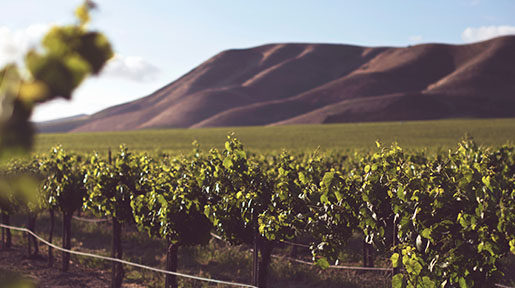
PG: The eastern half of the state is mostly desert. It’s hot in the summer, and dry in the winter. Vineyards are being planted in places that offer protection from Arctic blasts (such as above the Columbia river). Major advances in irrigation techniques and other strategies (burying canes, etc.) have also helped to mitigate the impact of the occasional bad winter freeze. When vines do freeze, remember, they are planted on their own rootstock, so they can be cut down to the ground and come back just fine. Can’t do that in California!
Q: If terroir can be defined, how would you define Washington's?
PG: Washington is a big place. There are many different soils and climatic conditions to explore. But to be very general, Washington fruit is bright and spicy, with tart natural acidity. The flavors of the white wines are crisp and citrusy; the red wines offer a multiplicity of berries, cherries and black fruits. Oak is generally used sparingly, and some winemakers are not afraid to show some of the herbal side of grapes such as Cabernet Sauvignon.