When you see references to Spain's Somontano DO, you'll also notice adjectives like "exciting" and "modern." In The Wines of Spain, author Julian Jeffs calls Somontano's wines "some of the best in Spain."
The Somontano DO was established in 1984, which makes it one of Spain's newer DOs. Interestingly, although wine has been part of Somontano's heritage since Roman times, the region did not develop a long-established traditional style of winemaking. This has allowed Somontano's present-day winemakers to experiment with not only their native grapes but also with foreign grape varieties. New investment in wineries and equipment has helped Somontano's wineries to double their exports since 1995, according to the Web site Wines from Spain, which is maintained by the Spanish Institute for Foreign Trade.
Somontano Winemaking History
Winemaking came to Somontano with the Romans some time around 500 B.C. As in most of western Europe, once winemaking was firmly established in Somontano, it was there to stay. As phylloxera began to devastate French vineyards in the 19th century, some French winemakers crossed the Pyrenees to nearby Somontano in order to make wine with healthy grapes grown in Spain. Both the Spanish native and foreign grape varieties did well in Somontano, but the region's wine industry did not begin to grow rapidly until the DO was officially established in 1984.
Since that time, winemaking in Somontano has grown and prospered at a breathtaking rate. Not only have innovative winemakers come to the region to establish new wineries, the existing winemakers have modernized and expanded. Throughout this period of growth, winemakers have remained focused on quality as the key to success in Somontano.
Geography, Soil and Climate
Somontano's unique location in Aragón near the foothills of the Pyrenees gives the region its name, which translates to "under the mountain." The region's climate, geography and soils are excellent for growing wine grapes. Somontano is an inland DO with a mild to moderate continental climate. Summers are hot and dry, with temperatures soaring as high as 104 degrees Fahrenheit. Winters are cold. Temperatures in winter months dip below 15 degrees Fahrenheit and frost can be a problem. There are several rivers within the DO, tributaries of the Ebro River, and grapevines are typically planted in Somontano's river valleys. Rainfall averages about 20 inches per year.
The soils of Somontano are ideal for grape growing. Most areas have healthy soils that are not very fertile. In many parts of the region, soils are limestone-based. Clay, calcium and sandstone are common, and vineyards near rivers also have alluvial material in their soils.
Somontano Grape Varieties
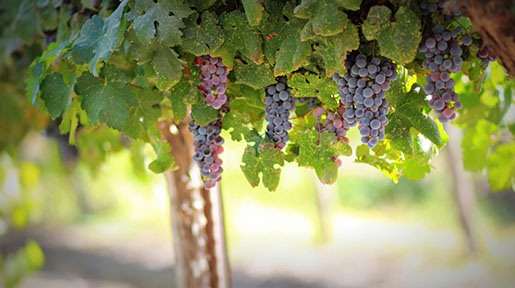
Somontano's growers can plant 13 different wine grape varieties under DO regulations. The DO is home to three local grapes, alcañón (white), moristel (red) and parraleta (red), but other Spanish and foreign wine grape varieties also prosper here. Commonly-planted white wine grapes include macabeo, garnacha blanca, chardonnay and gewürztraminer as well as alcañón. Popular red wine grape varieties include tempranillo, garnacha tinta, cabernet sauvignon and the local moristel and parraleta. Both single variety wines and blended wines are produced in Somontano.
Visiting Somontano Wineries
Wine tourism is well-developed in Somontano. Several top winemakers have added their wineries to the region's Somontano Wine Route ("Ruta del Vino Somontano") (Web site in Spanish only). You can start your wine journey in Barbastro, home to the DO's offices. You'll find the offices, a wine museum, a restaurant, tourist information office and a wine shop at the St. Julián and St. Lucía Discovery Center ("Centro de Interpretación de San Julián y Santa Lucía"). This is an excellent place to learn more about the region and its wines. Then, head out on the Wine Route to visit participating wineries. If possible, telephone or email each winery you would like to visit before you arrive; many Somontano wineries require advance reservations for tours and tastings.
Viñas del Vero is one of Somontano's top wineries. This winery is known for both its white and red wines. Viñas del Vero produces over six million bottles of wine per year. The company makes boutique red wine under the Blecua label and also owns the Secastilla brands. You can visit the winery's shop on the Viñas del Vero property during normal business hours, but you must book winery tours in advance.
Bodegas Olvena offers a wide range of visitor activities, ranging from tours to two levels of wine tasting classes. You must book these in advance, either by telephone or by email.
ENATE is known not only for its high-quality wines but also for its array of wine labels. The winery works with artists to create distinctive, modern labels that embody the winery's commitment to involvement in the modern world. You can visit the ultra-modern ENATE winery if you make an advance appointment. Children under 14 may not visit the winery.
If you'd like to spend the night at a Somontano winery, contact Bodegas Sers in Cofita. The winery's Casa Canales rents four rooms with optional breakfast, or you can rent the entire house. This boutique winery produces a small quantity of bottles each year. (Web site in Spanish only.)
Somontano's Future
Somontano's winemakers have taken the future firmly into their own hands, buying computer-controlled equipment, modernizing their wineries and increasing exports of their wines. The innovative approach Somontano winemakers have taken, with its emphasis on technology and experimentation, will ensure that wine lovers will continue to pay close attention to Somontano. I know I will.