
Madeira, named after the island it is made on, is like no other wine in the world. Perhaps no greater dedication has gone into the making of a fine wine, than that which has gone into the making of Madeira. Its success owes a lot to the primitive shipping conditions of the seventeenth century.
To reach the New World, the wines passed through the tropics. The baking it received in the blazing tropical sun, gave an otherwise light and acidic wine, a softness, depth of flavor, and a pleasant burnt quality. It was reasoned, if one crossing of the equator was good for the wine, two had to be better. By the late 1700's, orders were given to put pipes of Madeira in the hold of ships as ballast, and send them on round trip voyages to all parts of the world. A rather unique way to mature wine. The wine became known as vinho da roda or wine of the round voyage.
Why these wines, exposed to constant rocking, extreme heat, and the barrels often found soaking in bilge water, were not ruined, is a mystery.
Pronunciation Guide
Boal [boh-ahl]
Estufa [esh-TOO-fah]
Lagar [la-GAR]
Madeira [muh-DEH-rah]
Malmsey [MAH'm-zee]
Malvasia [mal-vah-ZEE-ah]
Sercial [sair-s'yahl]
Verdelho [vair-DAY'l-yo]
The History of Madeira
The island of Madeira sat uninhabited in the middle of the North Atlantic until a certain Portuguese explorer, Gonslaves Zarco, was blown off course by a violent storm in 1418 while exploring the coast of West Africa. He found sanctuary on a tiny island he called Porto Santo. While there he saw southwest of Porto Santo, dark clouds on the horizon described as "vapors rising from the mouth of hell." Knowing it must be a substantial island, he set off for the clouds and found beneath them a beautiful garden island. It was so covered with trees that he named it "wood" or in Portuguese, "madeira."
Zarco was sponsored by the third son of King João I, Prince Henry the Navigator. Though he could not be called a practicing mariner himself, Henry was the remarkable prince who was to set in motion the great age of discovery. As soon as Zarco's report got back to Prince Henry, he began at once its c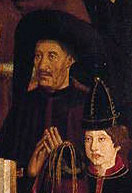
Port of Funchal
Two things conspired to help the growth of Madeira Wine. As Portugal's possessions expanded into the Americas, it was found that Brazil was able to produce better and cheaper sugar. Thus in the late 1500's, the island's farmers found that wine was a more profitable crop.
Secondly, Mardeira, situated as it is, in the Atlantic shipping lanes, was a natural port of call for any ships traveling across to the Americas or south around Africa to Asia. Thus, almost all friendly ships dropped anchor in the harbor of Funchal, the regional capital of Madeira. This was good fortune for Madeira and for its wine trade. Ships making the stop invariably loaded wine for the voyage. What cinched the deal was a piece of British legislation in 1665 forbidding the export of European wines to British colonies except through British ports and in British ships. The one exception was Madeira. As a result, it became a regular supplier to all American ships heading west.
America grew fond of the wine from Madeira and became one of its biggest customers, buying nearly a quarter of all the wine produced here. By the 18th century, the British American and West Indian colonies, drank it as their only wine. Not only was it the preferred wine, but it was so highly thought of that five years before the Boston Tea Party, it caused a riot on the docks of that city when British customs officials tried to impose duties on a shipment of Madeira. It was used to toast the Declaration of Independence in 1776, and in 1789, at the inauguration of George Washington..
News of its popularity in America from the troops returning from the American War of Independence created connoisseurs of Madeira in Britain as well. Ladies were known to use it to perfume their handkerchieves. Officers in the service of their country demanded 15 bottles of it a month. It was said to have tonic value as well. It was so recommended for sick or overworked people, that it was nicknamed the "milk of the old."
The wine industry was at its peak when disaster struck. Oidium or Powdery Mildew struck the Island. By the time it was learned that the disease could be controlled by dusting the vine leaves with sulphur, it had almost destroyed all production. After a brief period of rebuilding, the phylloxera louse arrived in 1873. Six thousand acres were destroyed. Only about 20% were replaced with true Madeira vines. Most were replanted with European and American hybrids.
When in 1974, a revolution ended 42 years of dictatorship in Portugal, Madeirans took hold of their future. Tourism is the Island's largest industry and is aggressively promoted. Their economy was given a boost when Portugal was admitted into the European Union in 1986.
In the 1980's, bananas were found to fetch a higher price per acre than grapes, so many vines were replaced with banana trees. Bananas are now the Island's biggest agricultural export.
Regions
The island of Madeira is located southwest of Portugal at a point 400 miles (680km) west of Morocco in the North Atlantic. Steeply rising up to 6000 feet (1800m) out of the sea, this lush volcanic subtropical outcrop, is the largest of a four island archipelago comprising Madeira, Porto Santo and the uninhabited Desertas and Selvagens. The island is 35 miles (57km) long by 14 miles (22km) wide, with a population of about 260,000. Almost half live in the regional capital of Funchal. The island is noted for its natural beauty. Exotic vegetation abounds in a carpet of green. The terrain is rugged with imposing valleys and some of the highest sea-cliffs in the world. The climate is temperate and the winters are mild.
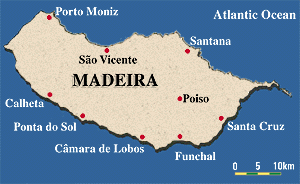
The burning of the forests to clear the land for cultivation in the 1420's, left the ground covered with an enriching layer of wood ash. This ash enriched volcanic soil has proved to be quite beneficial for the growing of grapes. Although the rainfall is heavy, some irrigation is required as the soil is very porous.
Grapes are grown all over the island, but the best sites have a southern exposure. The main vineyards are at Câmara de Lôbos and at Santana on the north coast.
