In the U.S. and abroad, the movement towards embracing organic foods is evolving rapidly. It seems a day can not pass without new information emerging concerning the health benefits of organic foods. Major grocers such as Whole Foods and Molly Stone’s are popping up in cities across the U.S. as consumers embrace the health benefits –and better taste – of organic foods. IntoWine.com recently chatted with Celine Guillou and Chris Tavelli, the owners of Yield, San Francisco’s first and only “green” wine bar, about “green” wine and the Yield Wine Bar experience.
What is the inspiration behind the name "Yield"?
Yield refers to the harvest of a particular year. This word comes up again and again in wine-related literature, particularly in reference to vineyards. Our name signifies our connection to the land and in particular the farming practices that we embrace.
Incidentally, it also means to give in, which corresponds to the other concept behind our wine bar -- a relaxing, lounge-like environment.
Your wine program is focused on serving the best "green" wines you can find. How do you define "green"?
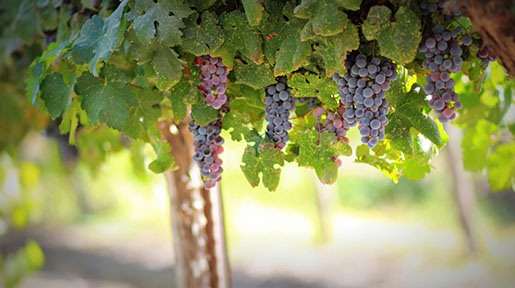
The definitions of “green” abound, and it's important to distinguish organic wine from wines made with organic grapes. In our case, we are most interested in farming practices -- in wines that are made with organically and/or biodynamically grown grapes, whether certified or not. What is most important to us in this day and age is serving wines made by people who farm in an environmentally sound way. Some wine made by conventional means (i.e. with chemicals, herbicides, pesticides) can have traces of up to 250 chemicals. If, in addition, they do not add sulfites, thereby making a truly organic wine, that’s great too, although this has less to do with the environment. Generally, winemakers who farm organically or biodynamically aren't interested in dumping a ton of sulfites in their wines, so their sulfite levels are generally very low and close to the levels of naturally-occurring sulfites. Healthy grapes mean less manipulation, which in turn leads to a better, more authentic wine.
With so many wine labels and producers from which to choose, what criteria do you use to filter out the "green" wines from the "non-green" wines?
Most wineries with sound practices seek us out, especially those in California. One of the reasons that we opened was to actually highlight that these wineries are farming organically and that “green” wines are excellent. Often, we see some green wines on other wine lists around town and there is no mention of it -- the server or wine buyer might not even be aware of it. We, on the other hand, like to convey this information to our consumers.
In the last 50 years, conventional wine making -as in all food production- has embraced the use of chemical additives and bioengineering . Which chemicals or processes in wine making most alarm you?
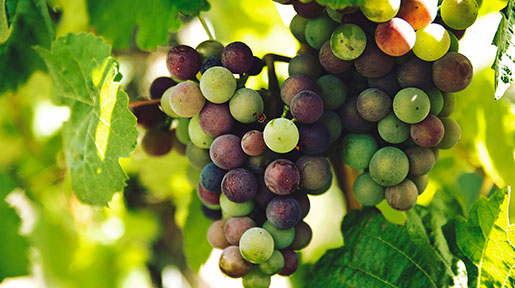
Most of them really, but that’s really a loaded question because at the winemaking level, some additives may be added (such as sugar or sulfites). What concern us the most are the chemicals – herbicides, pesticides – during the grape-growing process because those stay with the wine. A grape, by its very nature, absorbs everything with which it comes into contact (as opposed to grapefruits or avocados, for instance, which have thicker skin). And because the grapes, once harvested, are simply left to ferment and macerate, there is no cooking or other means of ridding them of these chemicals. So the stuff that is sprayed onto those grapes goes straight to your glass of wine. Which brings us back to the importance of organic farming. We at Yield can live with a few added sulfites, but not all those chemicals that may go into a grape.
The use of sulfites in winemaking is a controversial issue in the wine industry. What is your view on its use?
This is a winemaking issue, rather than a farming issue, obviously. Without sulfites, it would be virtually impossible for many foreign wines to ever make it to the US.. Sulfites occur naturally during fermentation (and the same goes with many foods that we eat such as dried fruit), so the issue is whether any additional sulfites are added. At the moment, USDA requires that to be certified an organic wine, no sulfites may be added. While we embrace and applaud wineries that do not add sulfites and make a good, lasting wine (it’s very difficult), sulfites in small amounts do have advantages with regard to preservation. We don’t believe that a wine needs to be sulfite-free (i.e., no added sulfites) to be healthy and organic, as long as it is made from organically farmed grapes. In many ways, this sulfite issue has really been a huge set back/disservice to the organic wine movement. Currently, different winemakers and wine importers are lobbying the USDA to change their certification policy to be more in line with European certification — with the focus on farming and not the addition of sulfites. Ultimately, the healthier the grapes, the less sulfites are needed.
Which wine regions worldwide are most embracing "green" wine making and agriculture? Which have been the slowest to adopt?
Spain, France, Northern California, (particularly Mendocino) and Oregon. Also Chile, New Zealand. Southern Italy (such an agrarian region that was not as affected by the Industrial Revolution has always for the most part been green). Slower to adapt are Central California, most of Germany, Australia.
How does the wine itself benefit from being "green"?
Flavor! More purity of flavor, less predictability. Non-organically farmed grapes are products of manipulation, which obviously affects the taste. The benefits of green farming are also in the soil, which in turn affects the grapes and of course the wine itself.
Wines made with flavor enhancers have an artificial taste to them, and wine made with too much sulfur have a rotten egg smell.
If you ask most people, they will tell you that organic produce has more flavor and is more wholesome than conventionally-grown fruits and veggies; the same goes with wine.
What, if anything, would a wine connoisseur find most differentiating between a conventional wine and a "green" wine?
No headaches and no hangovers. We firmly believe that the headaches and allergies people experience from wine are due to the fertilizers used in the grape growing process, and to a certain extent an over-abundance of sulfites.
What are some of your favorite "green" producers or labels? That is, who deserves a "shout out" for doing a fine job making both great AND green" wine?
Robert Sinskey, Sky Saddle, Coturri, Clos Saron, Medlock Ames, Barra of Mendocino, Sobon, Preston, Porter Creek, Silver Mountain, just to name some of our local producers.
Fill in the blank: A first time visitor to Yield should expect _____________
......to learn that organic wine is really fine wine and that good wine is made from healthy grapes.